
US military flies nuclear microreactor aboard C-17 in Operation Windlord first
The United States has taken a step that shifts nuclear power from fixed infrastructure to mobile capability.
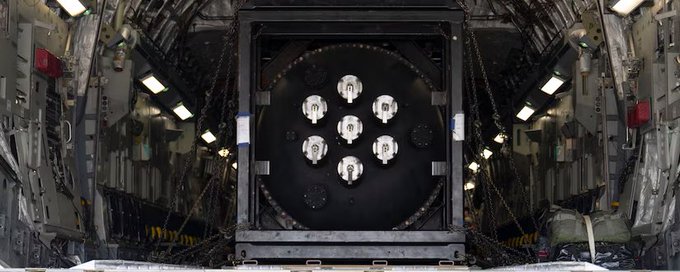
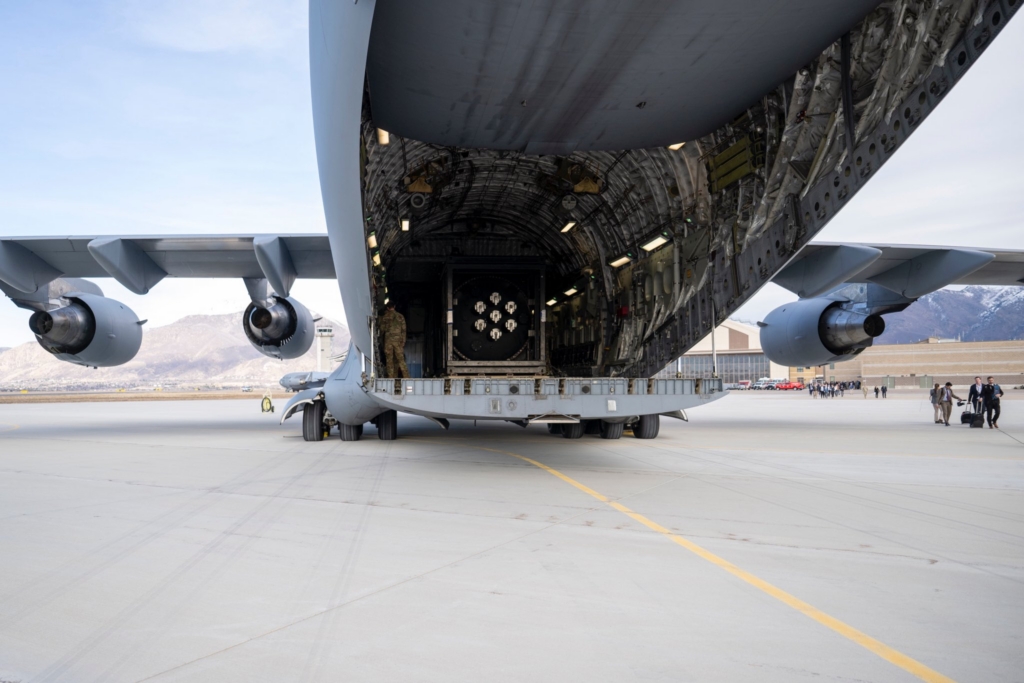
At March Air Reserve Base in California, a C-17 Globemaster III lifted off carrying a next-generation nuclear microreactor, marking the first time the US military has transported such a system by air.
The destination was Hill Air Force Base in Utah. From there, the reactor modules will move onward to the Utah San Rafael Energy Lab for testing and evaluation.
Officials described the mission not as a display but as a logistics exercise designed to answer a hard operational question: can nuclear power be delivered, installed and operated with the same speed and flexibility as other strategic military assets?
At the centre of the operation is the Ward 250, a five-megawatt microreactor developed by Valar Atomics. Small enough to fit into the cargo hold of a C-17 yet capable of generating enough electricity to power roughly 5,000 homes, the reactor represents a different approach to how energy might be supplied to military installations in the future.
Why the US military wants deployable nuclear microreactors
The rationale behind the airlift is rooted in vulnerability and demand.
Many US military installations rely heavily on civilian electricity grids. In a crisis, whether a cyberattack, natural disaster or sabotage, those grids can fail.
Overseas bases often depend on diesel generators that require continuous fuel resupply. In conflict environments, fuel convoys have historically been among the most exposed and attacked targets.
“For military use, such a reactor could provide energy security on a military base, ensuring the mission there need not depend on the civilian power grid,” officials said. In expeditionary or overseas operations, a reactor of this kind would allow forces to operate “without concern that an enemy might cut fuel supplies.”
Michael P. Duffey, Under Secretary of Defense for Acquisition and Sustainment, framed the move as part of a wider transformation.
“The future of warfare is energy-intensive,” Duffey said. He pointed to artificial intelligence data centres, directed-energy weapons, space assets and cyber infrastructure, systems that demand steady and resilient power.
“Powering next generation warfare will require us to move faster than our adversaries, to build a system that doesn’t just equip our warfighters to fight, but equips them to win at extraordinary speed,” Duffey said. “Today is a monumental step toward building that system.”
He added that progress depends on coordination between departments.
“It’s clear to me that advancing President Trump’s priority on nuclear energy depends on close coordination between the Department of Energy and the Department of Defense. This partnership ensures advanced nuclear technologies are developed, evaluated and deployed in ways that strengthen energy resilience and national security.”
Ward 250 microreactor built for C-17 airlift and rapid deployment
Microreactors differ fundamentally from traditional nuclear power stations.
Conventional reactors generate around 1,000 megawatts of electricity and are permanently tied to large-scale grid infrastructure.
Microreactors, by contrast, typically generate less than 50 megawatts and are designed for factory assembly and transport.
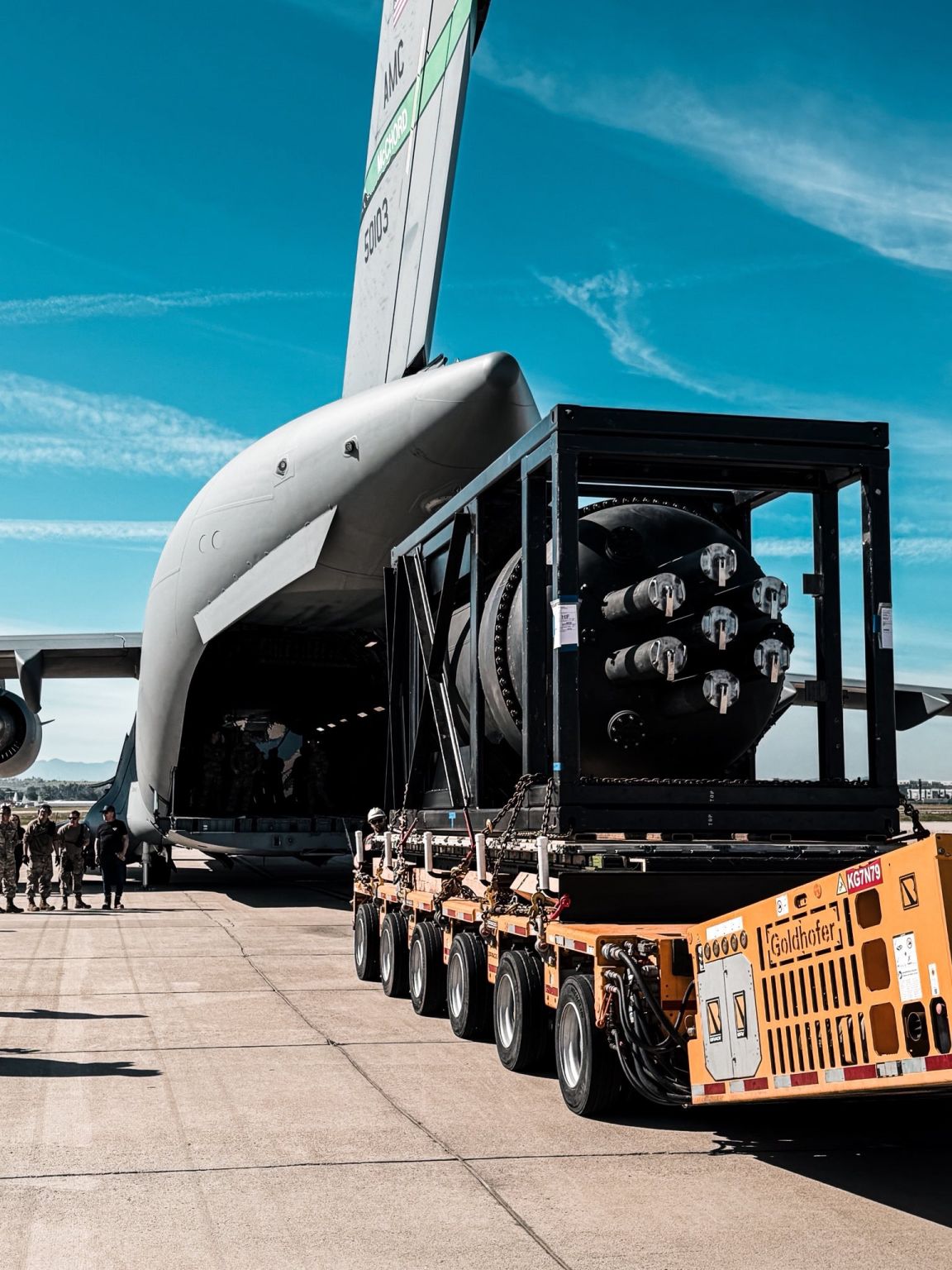
According to the Department of Energy, they are intended to be largely assembled in controlled environments before being shipped to site, reducing construction time and complexity. Their smaller size allows them to be transported by truck, rail or cargo aircraft.
The Ward 250 was flown without nuclear fuel loaded, meaning there was no radiological risk during transport. The fuel will be shipped separately before testing begins later this year.
Physically, the system is only modestly larger than a commercial vehicle. That size is deliberate. The reactor is meant to be delivered to a base, connected to local systems, and operated independently of civilian grids.
Ward 250 microreactor technology: TRISO fuel and helium cooling
Valar Atomics’ design uses helium as a coolant and graphite as a moderator. At its core lies TRISO fuel —tiny uranium kernels encased in multiple ceramic layers. Each particle acts as its own containment system, designed to retain fission products even under extreme temperatures.
Many microreactor concepts rely on high-assay low-enriched uranium (HALEU), enriched to higher levels than conventional reactor fuel but below weapons-grade thresholds.
The Government Accountability Office has identified limited HALEU availability as a key constraint facing widespread deployment.
Advanced cooling approaches, including helium gas systems, allow these reactors to operate at higher temperatures than traditional light-water designs.
Supporters argue that such systems offer enhanced safety margins and reduced refuelling requirements, with some designs capable of running for years without fuel replacement.
Isaiah Taylor, founder of Valar Atomics, sees the project as part of a broader strategic shift.
“For the first time in decades, nuclear energy is being treated as what it truly is: a strategic national asset essential to our prosperity, security and global influence,” Taylor said.
Valar has been selected by the Department of Energy to achieve criticality, the point at which a sustained nuclear chain reaction is established, on American soil by July 4, 2026.
The Utah testing phase is intended to move the project towards that milestone.
White House push to fast-track advanced nuclear reactors
The airlift comes within a wider policy context.
On May 23, 2025, President Donald Trump signed four executive orders aimed at accelerating advanced nuclear technologies. These included measures to reinvigorate the nuclear industrial base, reform reactor testing procedures, modernise Nuclear Regulatory Commission processes and deploy advanced reactors for national security.
Energy Secretary Chris Wright described the effort as the beginning of a revival.
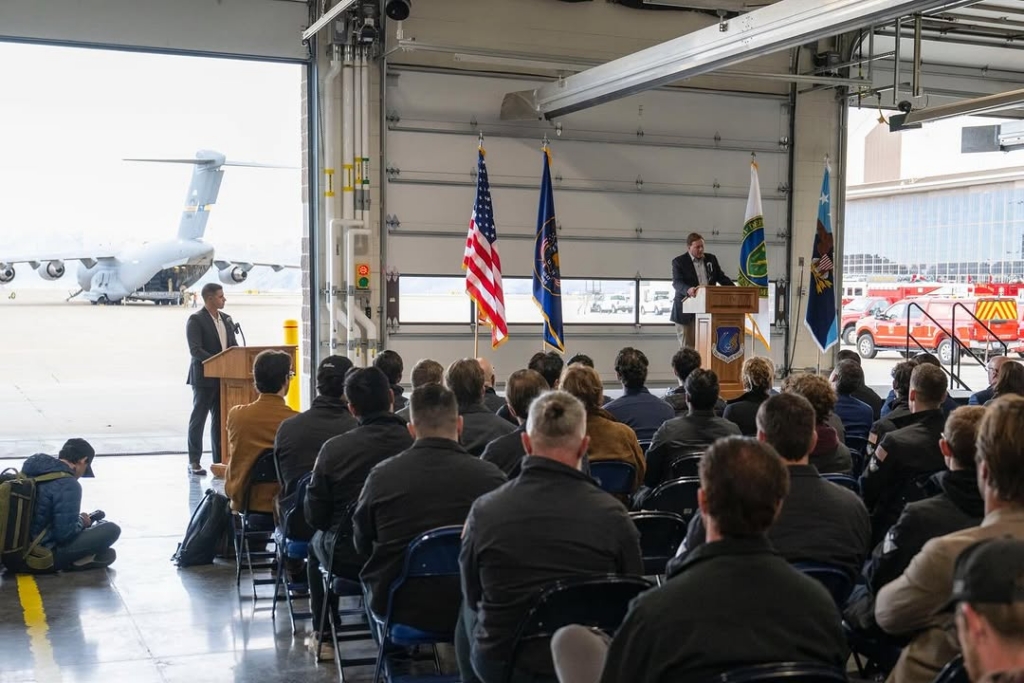
“The American nuclear renaissance is to get that ball moving again, fast, carefully, but with private capital, American innovation and determination,” Wright said. “President Trump signed multiple executive orders that have unleashed tremendous reform of all the things that stopped the American nuclear industry from moving.”
He said three small reactors are expected to reach criticality by July 4.
“That’s speed, that’s innovation, that’s the start of a nuclear renaissance,” Wright said.
Licensing, HALEU supply and cost challenges for microreactors
Despite the optimism, microreactors remain in the early stages of development.
The Nuclear Regulatory Commission has been studying how to adapt existing licensing frameworks to smaller and potentially mobile reactors. Long certification timelines, supply chain constraints and fuel availability remain significant challenges.
The GAO has also identified security and proliferation concerns linked to higher enrichment fuels, as well as unresolved waste management questions.
Cost remains another variable.
While proponents argue that factory fabrication and modular design could reduce construction timelines, economic viability at scale has yet to be demonstrated.
C-17 Globemaster III proves deployable nuclear logistics concept
For now, what has changed is not the policy debate but the practical demonstration.
The C-17 Globemaster III, designed for rapid strategic delivery of heavy and oversized cargo into austere airfields, carried the reactor modules like any other military load. That in itself marks a shift.
Whether microreactors become standard fixtures at American bases will depend on technical testing, regulatory approval, fuel supply and cost. Those questions remain open.
But the Pentagon has shown that it can package a reactor, lift it into the air, and move it where it needs to go.
In strategic terms, that may prove to be the most consequential development of all.
