
Royal Navy expands AI predictive maintenance to fixed-wing aircraft to boost readiness
The Royal Navy is stepping up its use of artificial intelligence to keep frontline aircraft flying, with the re-launch of the Motherlode analytics platform to predict failures, reduce unnecessary maintenance, and improve fleet availability across the Fleet Air Arm.
Unveiled by the Royal Navy’s 1710 Naval Air Squadron (NAS) in partnership with Defence Equipment & Support’s Automation and AI team, Motherlode Version 3 marks a significant expansion of the service’s data-driven maintenance approach.
Initially focused on rotary platforms, the upgraded system will broaden in 2026 to include fixed-wing fleets such as Poseidon, Wedgetail and Protector.
The move reflects a wider push within UK defence to translate artificial intelligence from experimentation into everyday operational tools for engineers and planners.
Royal Navy’s Motherlode V3 turns aircraft data into predictive maintenance decisions
At its core, Motherlode V3 is designed to convert large volumes of aircraft and maintenance data into clear, usable insight for engineers, continuing airworthiness teams and programme managers.
The application uses AI models to identify components that are likely to fail before deployment, flag environmental conditions that accelerate wear, and highlight maintenance tasks that repeatedly return no fault findings. By doing so, the system allows support organisations to refine inspection intervals and focus effort where it is genuinely needed.
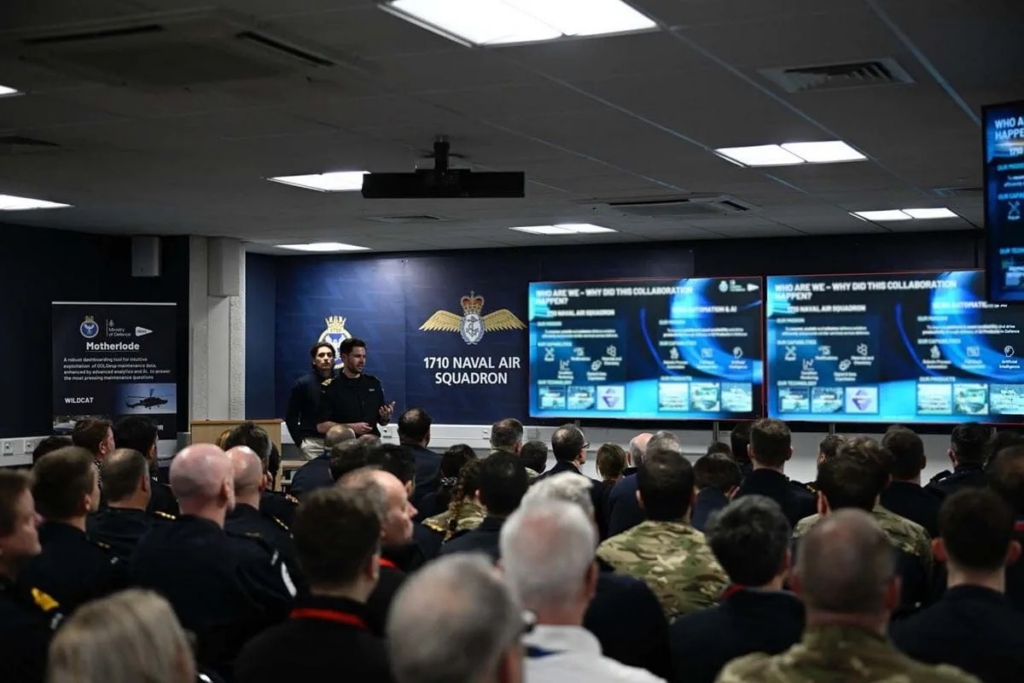
During demonstrations at the “Innovation at the Core” event at HMNB Portsmouth, the tool showed how it can also support detachment planning through predictive spares modelling, helping units deploy with more accurate logistics packages.
Lieutenant Commander Sam Budd of 1710 NAS said the aim was to give maintainers clearer situational awareness of aircraft health.
“We are giving maintainers the data, context and confidence they need to make rapid, informed decisions,” he said, adding that the tool has the potential to improve aircraft availability while easing pressure on engineering manpower.
Expansion beyond helicopters brings AI maintenance to Poseidon, Wedgetail and Protector
Earlier versions of Motherlode were primarily aligned with the Royal Navy’s helicopter force. Version 3 significantly widens the aperture.
The system currently supports platforms including Merlin, Wildcat, Apache and Chinook. From later this year, the roadmap extends to the Poseidon maritime patrol aircraft, the E-7 Wedgetail airborne early warning fleet and the Protector remotely piloted air system.
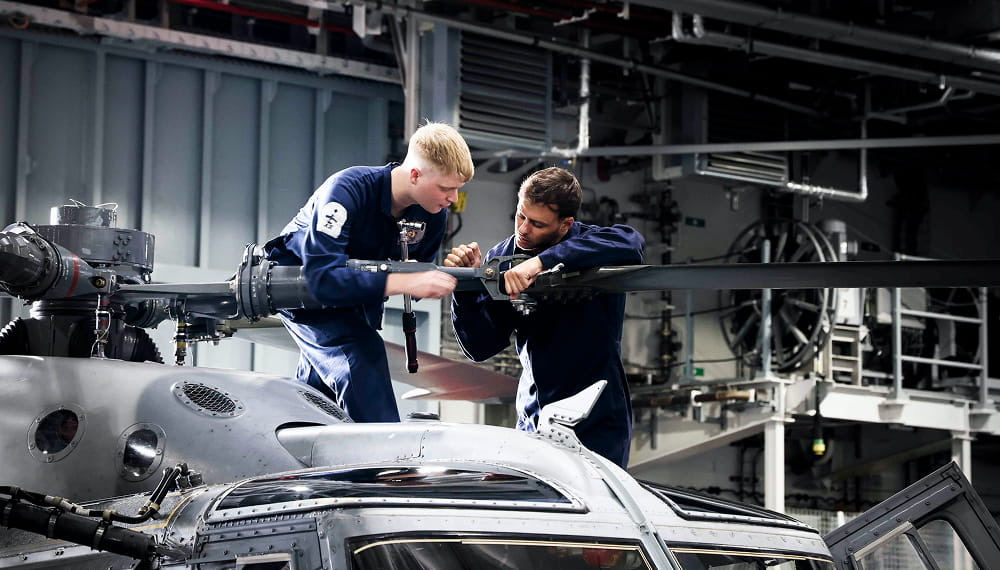
This cross-platform expansion is important. It indicates the Royal Navy and wider defence enterprise see predictive analytics not as a niche engineering aid but as a common digital backbone for aviation support.
By providing plain-language explanations alongside technical outputs, Motherlode is also intended to bridge the gap between data science and the realities of flight-line maintenance.
1710 Naval Air Squadron leads Royal Navy’s AI-driven aviation support
The lead role of 1710 NAS in the programme is consistent with the squadron’s unusual position within UK military aviation.
Often described as the Royal Navy’s aviation “emergency service”, the Portsmouth-based unit operates without aircraft, pilots or a runway. Instead, it provides deployable scientific and engineering support to military aviation across all three Services.
The squadron brings together uniformed personnel and specialist scientists who focus on structural repair, materials analysis, modification design and technical investigation.
Teams can deploy worldwide, including on Royal Navy ships, to recover damaged aircraft, implement urgent modifications or provide forensic engineering advice.
Formed in May 2010, 1710 NAS combined the Mobile Aircraft Repair Transport and Salvage Unit (MARTSU), the Mobile Aircraft Support Unit (MASU), the Naval Aircraft Materials Laboratory (NAML) and other specialist elements into a single organisation.
Today, its work is organised across three main pillars: globally deployable repair teams, a service modifications organisation that designs and certifies aircraft changes, and a materials and monitoring function that delivers advanced scientific support.
This blend of field repair expertise and deep technical analysis makes the squadron a natural home for data-driven maintenance initiatives such as Motherlode.
Innovation at the Core event signals wider Royal Navy digital transformation
The Motherlode relaunch formed the centrepiece of the Royal Navy’s “Innovation at the Core” event, attended by personnel from across the three Services alongside Defence Digital, Navy Digital & AI and industry partners.
The theme, reinforced by the First Sea Lord General Sir Gwyn Jenkins in a virtual address, was that innovation must move beyond experimental projects and deliver practical tools to frontline users at pace.
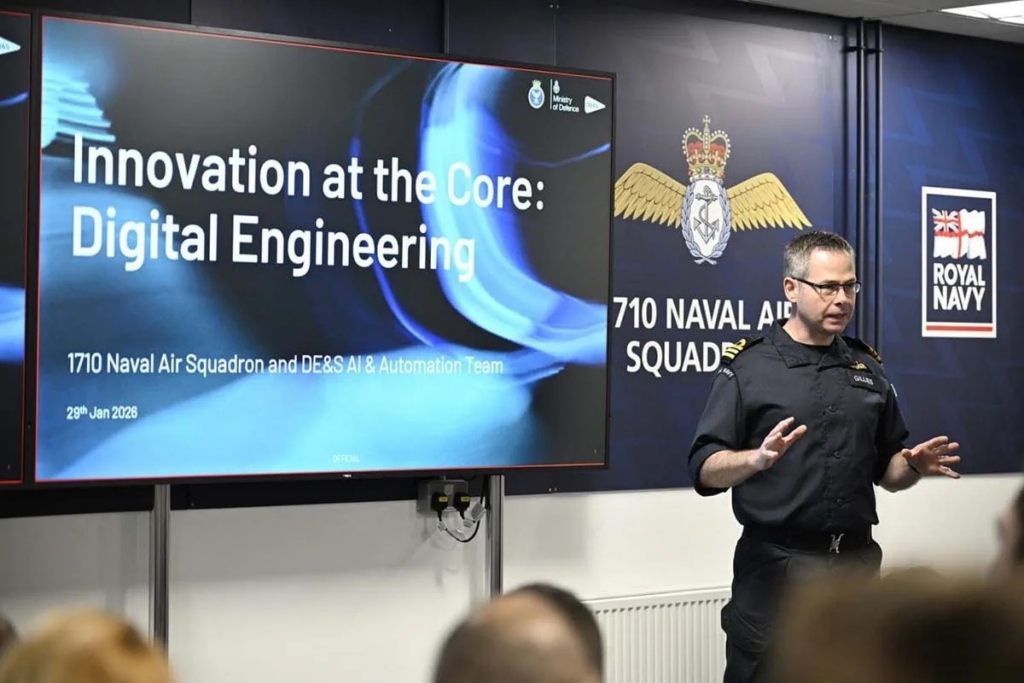
Alongside Motherlode, the event showcased complementary technologies including metallic additive manufacturing, 3D scanning for rapid damage assessment, motion amplification diagnostics and advanced vibration anomaly detection.
Taken together, the demonstrations highlighted a clear direction of travel: the Royal Navy is seeking to fuse digital engineering, artificial intelligence and deployable repair capability into a more responsive aviation support system.
From reactive aircraft maintenance to predictive sustainment across the Fleet Air Arm
The real test for the Fleet Air Arm with Motherlode V3 will be whether it can shift maintenance culture from reactive fault fixing towards predictive sustainment.
If the models prove reliable at scale, the system could help extend component life where safe, reduce unnecessary strip-downs and ensure spares arrive where they are needed before aircraft are grounded.
