
Powering the future of aviation: How KLIA Aeropolis Solar Park supports Malaysia Airports’ transformation journey
Malaysia Airports is entering a new phase of transformation.
Across its network, the focus is shifting towards strengthening the foundations that enable airports to serve future demand. While some improvements are visible to passengers through refreshed facilities and smoother journeys, many of the changes taking place are behind the scenes, involving the systems and infrastructure that keep airports operating every day.
Energy is one of those critical foundations.
For a major international gateway like the Kuala Lumpur International Airport (KLIA), reliable energy is essential to almost every aspect of operations. From terminal facilities and baggage systems to security checkpoints and airfield infrastructure, the airport depends on a stable power supply to support millions of passenger movements every year.
As the aviation industry moves towards a lower-carbon future, Malaysia Airports is taking steps to rethink how its airports are powered and operated. One of the most significant initiatives under this transformation is the development of the KLIA Aeropolis Solar Park, a landmark project consisting of a solar photovoltaic park and a battery energy storage system (BESS), one of the country’s largest renewable energy projects dedicated to airport self-consumption.
Developed together with Cenergi SEA Bhd, the Aeropolis Solar Park represents a major step in Malaysia Airports’ journey towards building more resilient and sustainable airport infrastructure.

— Dato’ Mohd Izani Ghani,
Managing Director of Malaysia Airports
“The Aeropolis Solar Park reflects Malaysia Airports’ approach to strengthening energy resilience while advancing its commitment to a lower-carbon future. Through strategic partnerships and long-term investment, the organisation is building airports that are better prepared to support Malaysia’s aviation growth and sustainability ambitions,” said Dato’ Mohd Izani Ghani, Managing Director of Malaysia Airports.
Building energy resilience for a growing airport
The Aeropolis Solar Park is designed to support KLIA’s long-term energy requirements while reducing the reliance on conventional electricity sources.
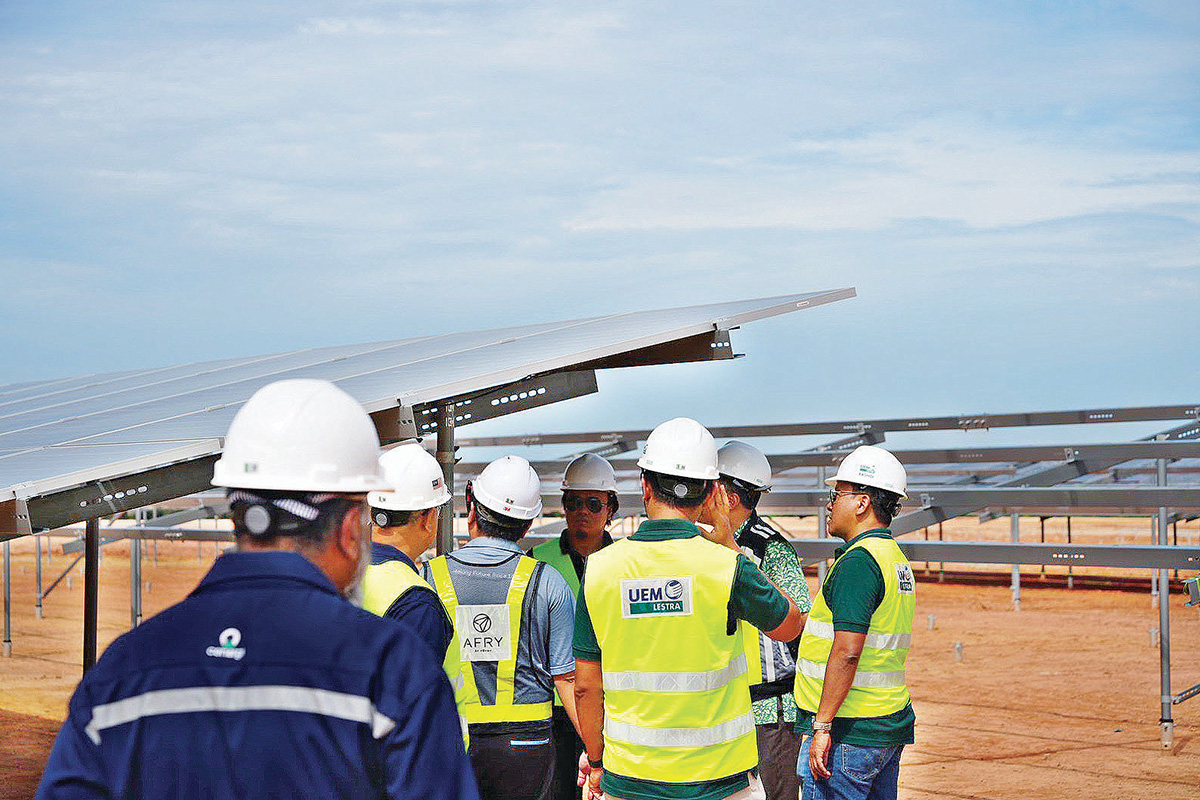
Located on a 102-acre site in Sepang, Selangor, the Aeropolis Solar Park is being developed on an existing oil palm plantation, allowing renewable energy generation without deforestation or major land conversion. This reflects a practical approach to renewable energy development by making use of existing land while supporting the transition to cleaner operations.
Once operational, the facility will feature a solar plant capacity of 36MWp, complemented by 45MWh of usable BESS capacity. The integrated system will allow energy generated during the day to be stored and deployed during evening peak demand periods, providing greater consistency and reliability in renewable energy supply for KLIA’s operations.
The plant is forecast to generate an average annual output of 46,000MWh over its 25-year operational period. Scheduled for commercial operation in 2027, the Aeropolis Solar Park will become a key component of KLIA’s transition to a more resilient and sustainable energy model.
“Designing a solar park of this scale to integrate seamlessly with a fully operational international airport required careful engineering, meticulous planning and close coordination across multiple stakeholders. From site preparation on an existing plantation to the integration of battery storage for grid stability, every element has been optimised to deliver reliable clean energy for airport operations,” said Ir Kwok Yew Hoe, Group CEO of Cenergi SEA.
Supporting Malaysia Airports’ Net Zero Decarbonisation Roadmap
The Aeropolis Solar Park forms a key part of Malaysia Airports’ wider Net Zero Decarbonisation Roadmap, which outlines the organisation’s approach to reducing emissions while preparing its airports for future growth.
Upon full operation, the project is expected to enable KLIA to achieve a renewable energy mix of about 30%, contributing to Malaysia Airports’ target of achieving a renewable energy mix of 20% by 2030 and net zero carbon emissions by 2050. The project also supports Malaysia’s aspiration to achieve 70% renewable energy share in the national installed capacity mix by 2050, as outlined in the National Energy Transition Roadmap (NETR).
From an environmental perspective, the Aeropolis Solar Park is expected to avoid about 35,000 tonnes of carbon emissions annually. This is equivalent to the carbon absorbed by more than 580,000 trees or the annual electricity consumption of around 13,400 households. This reduction will contribute to lowering KLIA’s operational carbon footprint while supporting the transition to more sustainable airport operations.
The project builds on KLIA’s existing sustainability progress, including its achievement of Level 3 Airport Carbon Accreditation under Airports Council International’s global programme. Together, these contributions to a higher renewable energy mix and lower carbon emissions reinforce KLIA’s ongoing energy transition goals and support its progress towards more sustainable airport operations, while laying the foundation for KLIA’s future advancement towards Level 4 Airport Carbon Accreditation.
Renewable Energy Centre of Excellence
The KLIA Aeropolis Solar Park is designed to deliver more than renewable electricity. It will also house the Renewable Energy Centre of Excellence (CoE), creating a platform for industry collaboration, capability development and innovation in clean energy.
The centre will include laboratories, an auditorium and interactive learning facilities featuring live operational dashboards and virtual reality experiences. It is intended to support knowledge sharing among industry players, researchers, students and government stakeholders, while helping to build the skills needed to support Malaysia’s energy transition.
By combining operational infrastructure with education and research, the Aeropolis Solar Park extends its impact beyond KLIA, contributing to the wider development of Malaysia’s renewable energy ecosystem.
Looking ahead
As Malaysia Airports pursues its aspiration to position Malaysia as the most connected nation in Southeast Asia by 2030, sustainability will remain central to how the group develops and operates its airports.
“The Aeropolis Solar Park reflects Malaysia Airports’ broader direction in modernising its airport network. Alongside enhancing the passenger experience and strengthening operational capability, the organisation is investing in critical infrastructure that supports long-term resilience. Reliable, lower-carbon energy is becoming an essential component of operating a major international airport, and the project demonstrates how sustainability can be integrated into core airport operations while supporting Malaysia’s broader energy transition,” said Mohd Izani.
For Malaysia Airports, the Aeropolis Solar Park represents more than just a milestone in renewable energy adoption. It is a strategic investment in strengthening energy resilience, supporting long-term airport operations and advancing the organisation’s Net Zero Decarbonisation Roadmap.
By integrating clean energy generation, battery storage and capability building in a single development, the project lays the foundation for a more resilient, energy-efficient airport ecosystem that is well positioned to support Malaysia’s future aviation growth.
