
NTSB Deems Broken Wire Responsible For FedEx Boeing 757 Gear-Up Landing
The National Transportation Safety Board (NTSB) determined that a broken wire and hydraulic fluid leaks caused the landing gear failure on the FedEx Boeing 757. This conclusion was included in the NTSB’s final report on the incident, which occurred on October 4, 2023.
Boeing 757
- Launch Customer(s)
- Eastern Air Lines, British Airways
- Manufacturer
- Boeing
- Aircraft Type
- Narrowbody
- First Delivery
- December 22, 1982
This incident occurred when the flight crew of a Federal Express Boeing 757-200 aircraft was unable to extend the landing gear while approaching Chattanooga Metropolitan Airport–Lovell Field (CHA) in Chattanooga, Tennessee.
Landing Gear Malfunction
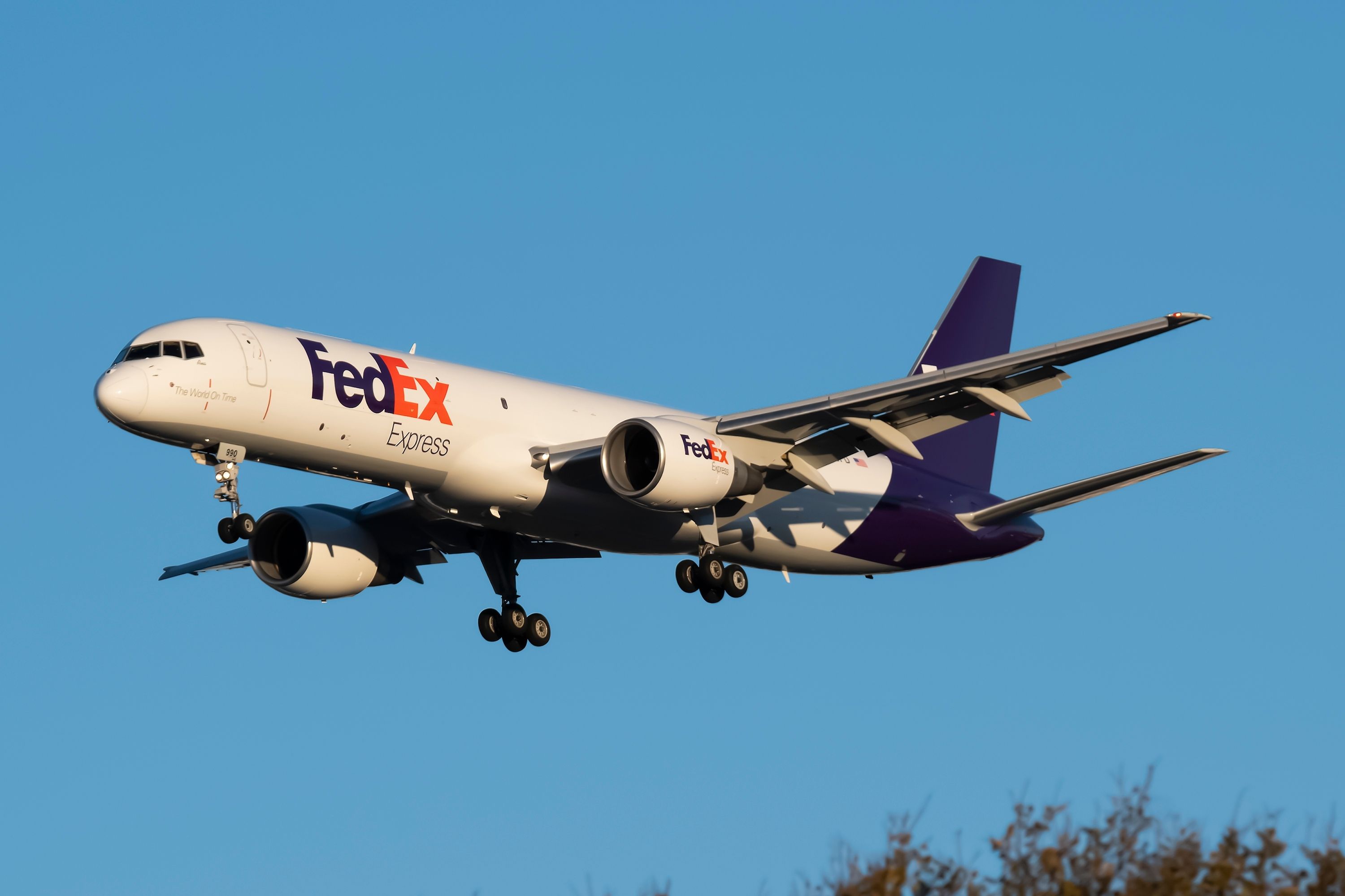 Photo: Robin Guess | Shutterstock
Shortly after departing from Chattanooga, the captain of flight 1376 commanded the landing gear to be retracted, and the first officer moved the gear control lever accordingly. The crew reported that both the main landing gear (MLG) and nose landing gear (NLG) successfully retracted and locked in the up position.
However, data from the digital flight data recorder (DFDR) showed that 22 seconds after retraction, the hydraulic fluid quantity and pressure in the left hydraulic system began to drop, according to the NTSB report. Soon after, a low fluid quantity warning for the left hydraulic system and a master caution alert were recorded.
After following the Quick Reference Handbook procedures to troubleshoot the hydraulic issue, the flight crew decided to return to Chattanooga. During preparations for landing, the main landing gear and nose landing gear failed to extend when the gear control lever was moved to the down position. Cockpit voice recorder data captured a triple chime, followed by the captain stating,
“Gear disagree,” and the first officer confirming, “Gear disagree. The gear is not coming down.”
Sliding Off The End Of The Runway
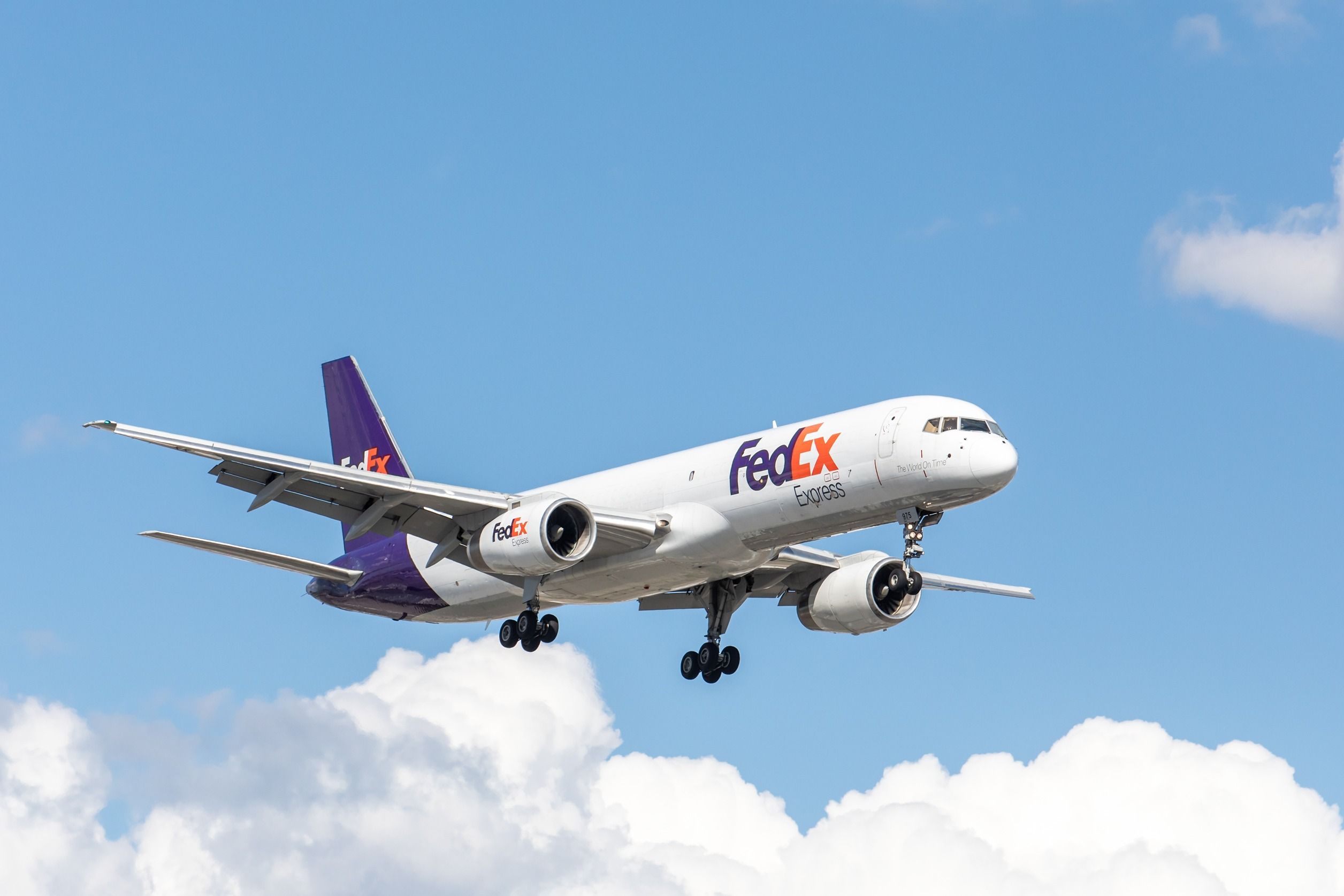 Photo: sockagphoto | Shutterstock
Following the failed attempt to lower the landing gear, the captain contacted ATC to break off their approach and reported that they had an unsafe gear indication. After all the necessary checks and attempts to lower the landing gear, the crew set the aircraft up for the final approach, and they began following “the Gear Disagree checklist.” ATC cleared the flight to land.
According to the report, upon landing on the runway, the flight crew could not stop the Boeing 757, and it slid off the departure end of the runway and impacted localizer antennas before coming to rest about 830 feet beyond the end of the runway. Before landing, the flight crew agreed that a jumpseat occupant on board the airplane would open the left forward main entry door after they landed.
After the airplane came to a full stop, the flight crew followed the evacuation checklist. The jumpseat occupant first tried to open the left door, but it only opened halfway, and the slide didn’t deploy. They then tried the right door, which was stuck on the slide pack. Using force, they managed to open it, and the slide deployed properly. The flight crew and jumpseat occupant exited the aircraft through the right door and slid. No one was injured. Notably, the incident was classified as an accident because the Boeing 757 suffered significant damage.
A FedEx Boeing 757 gear-up landing incident, where the crew struggled to deploy the evacuation slide, prompted the recommendation.
Post-Accident Inspection And Findings
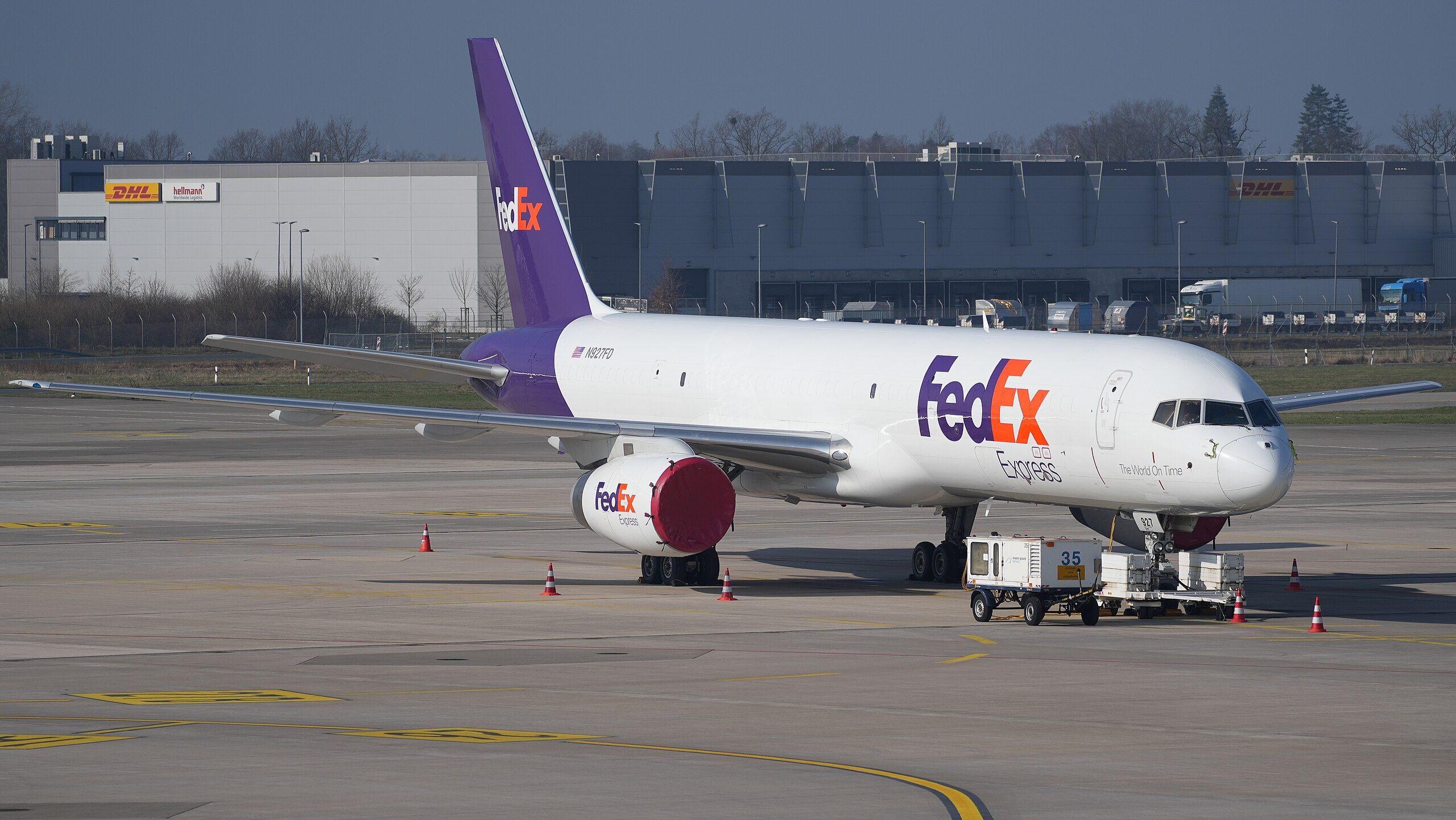 Photo: MarcelX42 | Wikimedia Commons
After the accident, inspections revealed that hydraulic fluid was leaking from the hose connected to the left landing gear door actuator. It was also found that the engine indication and crew alerting system showed only 32% hydraulic fluid remaining in the left system shortly after take-off, almost empty. Once the damaged hose was replaced and the system was refilled with fluid, the landing gear worked normally using the standard extension method.
Further review showed that a leak in this hose could cause the left hydraulic system to lose pressure. Without that pressure, the system can't release the internal locks in the gear door actuator, which means the doors can’t open, and the landing gear can't be lowered in the normal way.
Additionally, the damaged hydraulic hose was found to have several broken wire strands along its length, as well as a rupture in its inner polytetrafluorethylene liner near the cluster of broken wires. The wire strands likely broke due to an overload, which was shown by the thinning and stretched appearance of the wires. There were no signs that the wires had failed from fatigue.
