
Natilus targets 2027 first flight for Kona blended wing body cargo aircraft
Blended wing-body aircraft have long been eyed as the future of aviation. Natilus is now preparing to find out whether that future can move from studies, renderings and wind tunnel models into full-scale flight testing.
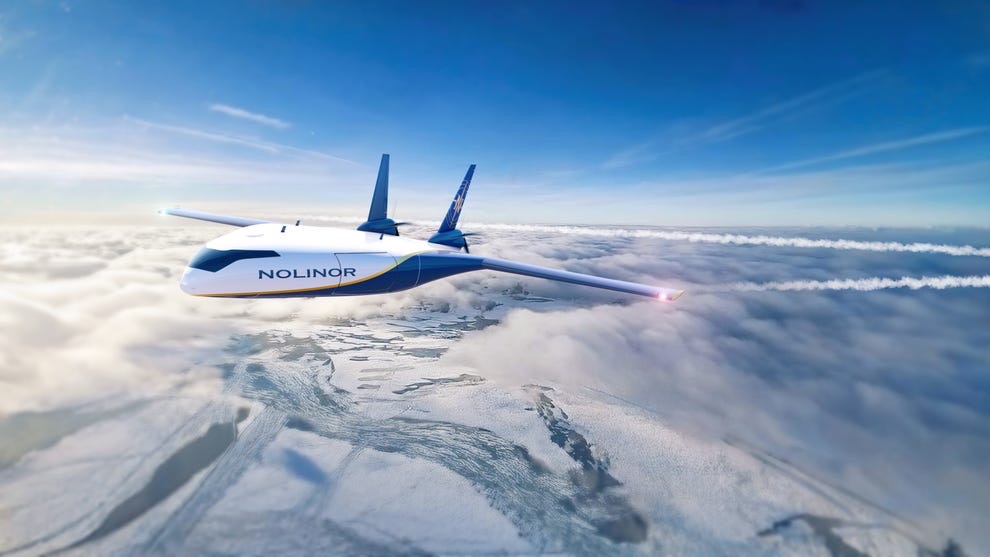
The California-based start-up is developing Kona, a regional cargo aircraft designed around a blended wing-body configuration. If the programme progresses as planned, Kona could become the aircraft that proves whether Natilus can turn an unconventional aerodynamic concept into a certifiable commercial product.
Following a $28 million funding round, Natilus is now working towards the first flight of a full-scale Kona prototype in 2027 or early 2028.
For Aleksey Matyushev, co-founder and CEO of Natilus, Kona is not just a product in its own right. It is the company’s near-term proof point before it attempts to bring its larger Horizon passenger aircraft to market.
Kona is the proof point for Natilus
Kona is being developed as a regional cargo aircraft, but its significance goes well beyond freight. Natilus is using the aircraft to prove the aerodynamic, manufacturing and certification foundations of a blended wing-body design before scaling the architecture into larger aircraft.
“We’ve been moving in the background,” he told AGN in an exclusive interview. “We have things like vertical tails, control surfaces, iron birds, and simulators already built in our facility. So now it’s kind of like the calm before the storm.”
The company is now releasing supplier packages for major structures, including the wing, body and major joints.
“Over the next 18 to 20 months, we’ll start to see real hardware, real tooling start to appear, and of course the real flight hardware parts,” Matyushev said.
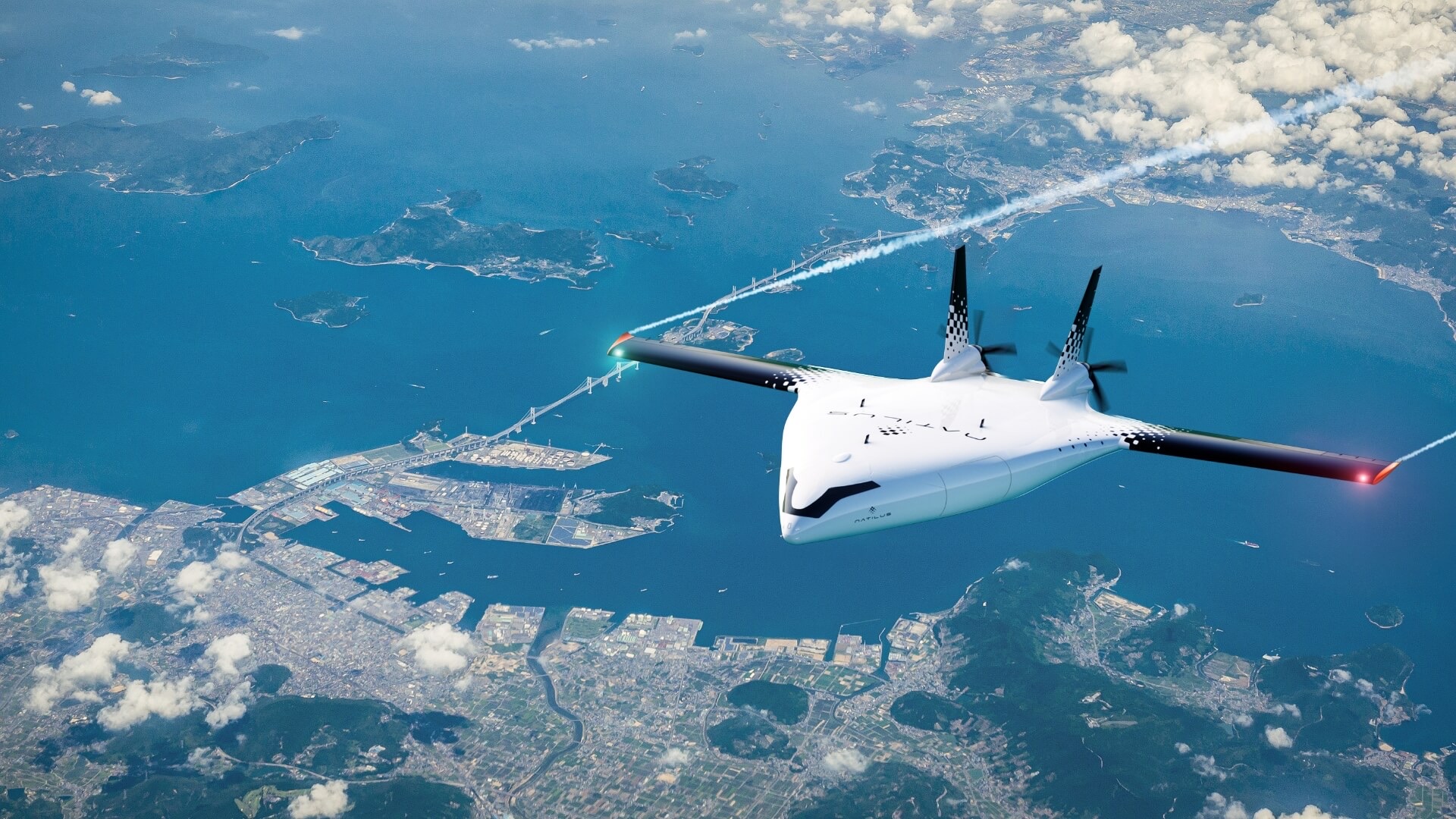
Blended wing-body aircraft have historically been easier to study than to commercialise. The configuration, where the wing and fuselage blend into one lifting body, promises greater internal volume and improved aerodynamic efficiency compared with a conventional tube-and-wing aircraft.
But Kona is designed to test whether those advantages can be turned into a practical cargo aircraft.
Matyushev described the aircraft as “the first blended wing body ever, period,” distinguishing it from military flying wing aircraft such as the B-2.
“A blended wing body is more like a flying wing with a belly, or like a pregnant flying wing,” he said. “But that belly, there’s a lot that goes into that belly.”
A radical shape designed to fly like a conventional aircraft
Despite the unusual shape, Natilus is keen to stress that Kona is not intended to be a difficult aircraft to fly.
Matyushev said the company has completed three wind tunnel tests, with the data being fed into Kona’s simulator so pilots can train on handling qualities that reflect the aircraft’s expected behaviour.
“We’ve done three wind tunnel tests to date, and so we have a lot of data that’s being fed into the simulator,” he said. “You can actually fly, and it’ll mimic the real flying handling qualities of the Kona, so the pilots have gotten used to it.”
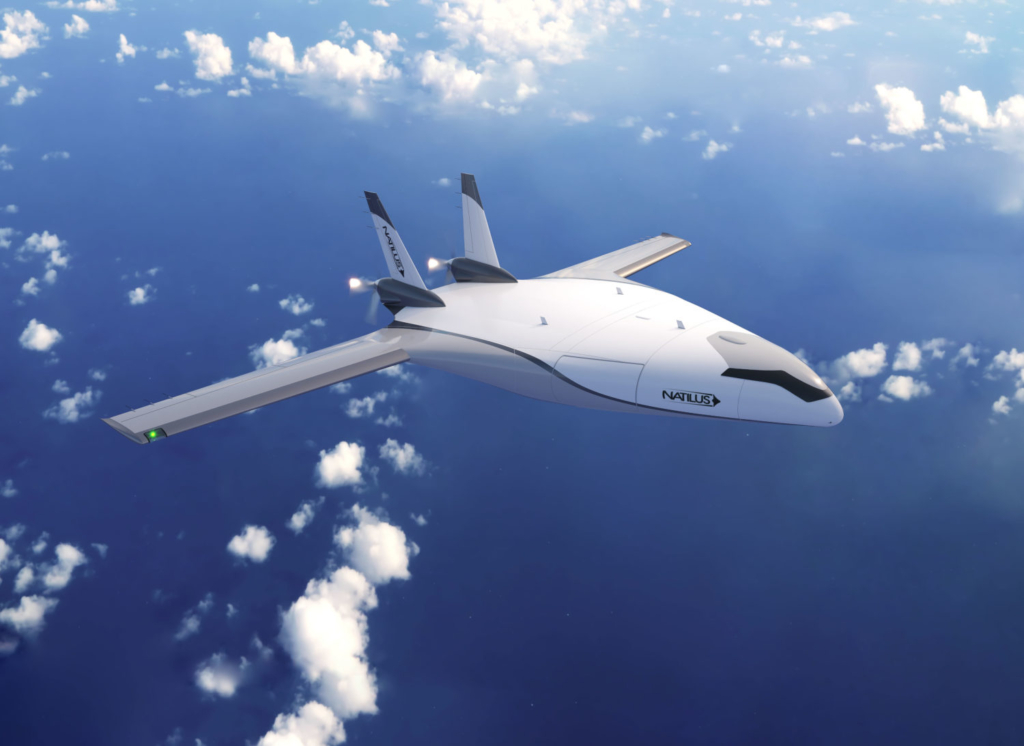
For Kona, Natilus has avoided the complexity of a fly-by-wire flight control system. Matyushev said the aircraft’s size and performance category mean it does not need the control architecture associated with larger, faster or more complex designs.
“There’s no computer on it at all,” Matyushev said. “It flies like a Beech King Air, honestly.”
Natilus wants the aircraft to be seen not as an exotic research project, but as a practical cargo aircraft that operators can understand.
“A lot of professional pilots and test pilots coming in from major airlines, they fly the simulator, and they’re just really surprised at how well it behaves and how well it performs,” Matyushev said.
Certification work for Kona is already underway
Natilus is already working with the FAA to establish the certification basis for Kona. Matyushev said the aircraft should sit under a lower level of regulation than a large commercial passenger aircraft because it is a smaller, lower-performance cargo platform.
That does not make certification easy, but it gives Natilus a more achievable route into service than starting with a full-size passenger aircraft.
“We’re working with the FAA today to establish the certification base,” he said. “A lot of documents are starting to move. But we’re looking at 2029 customer deliveries, so about 18 months to 24 months to certify.”
Natilus intends to fly Kona for the first time in 2027 or early 2028. The first aircraft to take to the skies will not be a scale model, but a full-size prototype.
Rough-field cargo gives Kona a practical mission
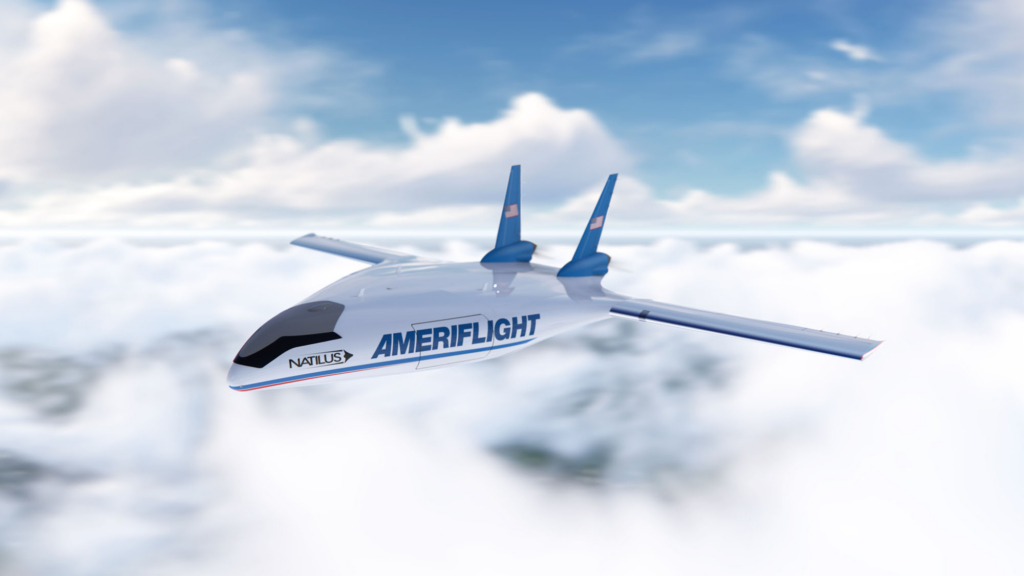
Kona has already attracted customers, including Canadian airline Nolinor Aviation and US cargo carrier Ameriflight. For Nolinor, which is known for operating gravel-equipped Boeing 737-200s into remote northern communities, rough-field capability is a key part of the appeal.
Matyushev said Kona was designed from the outset with those kinds of operations in mind, including larger tyres and propeller inlets positioned to support rough-field performance.
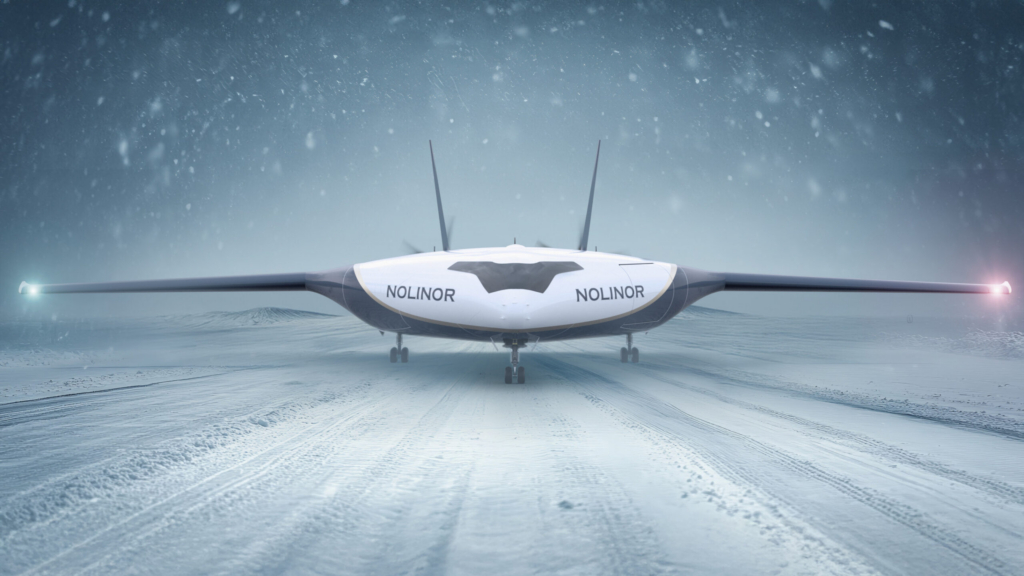
“We designed this from the very beginning,” he said. “A lot of the King Airs and smaller Pilatus today have that capability, and so that was something that really got Nolinor excited about, to have that capability in a smaller, more attainable package.”
However, he was careful not to frame the programme around which customer receives the first aircraft.
“Nolinor is definitely in line for the Canadian market,” he said. “And of course, we have other customers here in the United States for Ameriflight, and so we’re working with everybody just to make sure that, first of all, we get to market as quickly as possible, and second of all, we actually provide that manufacturing capacity they’re all looking for.”
Cargo and autonomy are natural bedfellows
Kona is also being designed with future autonomy in mind. Although autonomous aircraft have a regulatory mountain to climb, non-passenger-carrying solutions are likely to come first. As Matyushev says, “Cargo and autonomy naturally go together.”
Natilus is positioning itself not necessarily to be first, but to be ready shortly after autonomous cargo rules and technologies mature.
“It’s a very interesting technology for commercial customers,” he added. “It’s even more interesting for the Department of Defense, or the Department of War here, and NATO allies. So we actually see the first iteration of autonomy being in more military applications than commercial.”
That future capability gives Kona another potential role beyond regional freight. For defence customers, an autonomous or optionally autonomous blended wing-body cargo aircraft could offer a different approach to distributed logistics, particularly in riskier situations.
Can Natilus scale beyond Kona?
The company is also developing Horizon, a larger blended wing-body passenger aircraft. Nevertheless, Matyushev said Kona remains a crucial stepping stone because it allows Natilus to prove the configuration, simplify the design and learn before scaling up.
That manufacturing challenge is already shaping the company’s plans. Kona is being built in San Diego, where Natilus has a manufacturing facility, but future production may require more capacity.
“San Diego is a great place to do research and development, and we’re working with the city to see if we can increase our capacity here,” Matyushev said. “But obviously, if there’s a better way or a better place, then we’re of course very opportunistic there as well.”
For Natilus, Kona is more than a regional cargo aircraft. It is the aircraft that will show whether the company can make blended wing-body technology behave like a practical commercial product, certify it, deliver it, and then scale the lessons into larger platforms.
Matyushev believes airlines and operators are already sold on the concept, but the real challenge is around building a contender to Airbus and Boeing. “I think it’s not really about the airplanes at this point,” he said. “It’s more about the company.”
