
Excalibur flight test aircraft resumes flying after major upgrades as UK props GCAP programme
The UK’s Excalibur Flight Test Aircraft has returned to the skies following a new round of modifications, marking the latest step in a programme designed to reduce technical risk before key technologies are integrated into the Global Combat Air Programme (GCAP) fighter expected to enter service from 2035.
The converted Boeing 757, developed by Leonardo in partnership with specialist aviation company 2Excel and the UK Ministry of Defence, has completed the next phase of flight testing after extensive structural modifications, including the installation of a fighter-style nose radome, large fuselage-mounted pods and other external fairings that will support advanced sensor and communications trials.
Rather than testing a new aircraft, Excalibur serves as a flying laboratory where engineers can evaluate technologies in real flight conditions years before they are installed on Britain’s future sixth-generation combat aircraft. The approach is intended to shorten development timelines, identify problems earlier and reduce programme risk before the first GCAP aircraft takes to the air.
The project is a central element of the UK’s Future Combat Air System (FCAS), which forms Britain’s contribution to GCAP, the trilateral programme involving the UK, Italy and Japan to develop a next-generation combat aircraft and associated systems.
Modified Boeing 757 will help validate advanced sensors and communications before they reach the future fighter
Leonardo said the latest flight campaign follows a series of progressively demanding trials conducted from Boscombe Down, the UK’s centre of excellence for military flight testing.
According to the company, the aircraft has successfully completed its initial flight test campaign, validating aerodynamic performance, aircraft handling characteristics and updates to its air data systems while achieving all planned certification objectives.
The next phase will include noise testing and flights in known icing conditions before the aircraft begins evaluating mission systems that will eventually support GCAP.
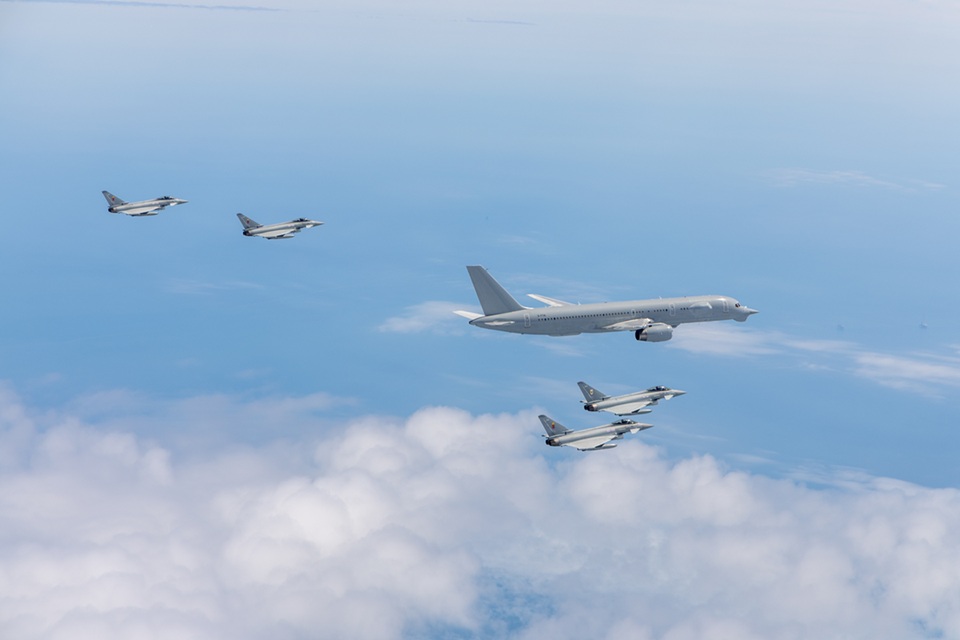
The modified Boeing 757 provides engineers with something that a fighter aircraft cannot: space. Its large cabin accommodates scientists, flight test engineers, computing equipment, mission racks and instrumentation, allowing multiple systems to be tested simultaneously in a real operational environment. It can also generate the electrical power needed to support sophisticated sensors and communications equipment that will underpin future combat aircraft.
The in-flight data collected aboard Excalibur will feed directly into the development of technologies destined for the UK’s next-generation combat aircraft.
Luke Pollard, UK Minister for Defence Readiness and Industry, said: “Excalibur is a clear demonstration of UK innovation and industrial strength. This milestone brings us closer to delivering a capability that will safeguard our skies and keep Britain at the cutting edge of combat air technology for decades to come.”
Project builds on $155 million investment announced to create a flying electronics laboratory
The latest milestone builds on the UK Government’s award of a £115 million ($155 million) contract to Leonardo in 2023 to convert the former passenger aircraft into what officials described as a “flying electronics laboratory”.
The aircraft is being developed jointly by Leonardo and 2Excel as part of Team Tempest and supports the wider Future Combat Air System, which extends beyond the crewed fighter itself to include sensors, communications, digital networks, uncrewed systems and advanced weapons.
Since the contract was announced, the aircraft has undergone extensive structural modifications to prepare it for increasingly sophisticated flight trials.
Its most visible changes include a redesigned fighter-style nose radome and large external fairings mounted along the fuselage, which are designed to accommodate advanced mission equipment. Earlier modifications were primarily intended to validate the aircraft itself following conversion work.
The programme is now moving towards testing operational technologies that could eventually equip the future GCAP fighter.
Andrew Howard, Director of Future Combat Air at Leonardo, said: “This is an exciting milestone for the Excalibur Flight Test Aircraft programme. Leonardo, working in partnership with the MOD and 2Excel, is driving rapid progress, with aircraft modifications advancing at pace. With the Flight Test Aircraft, we are leading the way in the development and validation of next-generation air combat technologies, providing a key enabler of the UK Future Combat Air System and the Global Combat Air Programme (GCAP).”
Excalibur will test technologies that allow future fighters to process and share battlefield information
Although the aircraft attracts attention because of its unusual appearance, its importance lies in the systems it will carry.
Over the next three years Leonardo will integrate the Integrated Communications System (ICS) and the Integrated Sensing and Non-Kinetic Effects (ISANKE) suite onto Excalibur before beginning dedicated flight trials.
Together, those technologies are intended to allow the future GCAP fighter to gather information from multiple sensors, process vast amounts of battlefield data and rapidly distribute it across military networks to pilots and commanders operating in increasingly contested environments.
Unlike earlier generations of combat aircraft, the future GCAP platform is expected to operate as part of a wider combat ecosystem, sharing information continuously with other aircraft, uncrewed systems, satellites and ground forces rather than acting as a standalone fighter. Excalibur allows many of those technologies to be matured years before they are installed on the production aircraft.
Programme supports hundreds of UK jobs while preparing for the next phase of GCAP development
Leonardo said the Excalibur programme currently supports more than 300 highly skilled jobs across the UK, including engineers, apprentices and graduates, with work spread across multiple sites through Leonardo, 2Excel and their industrial partners.
Chris Norton, Director and Co-founder of the Flight Test Aircraft Programme at 2Excel Aviation, said: “The Excalibur programme is a sovereign endeavour, delivered across the UK from concept to capability. At 2Excel’s facilities in Doncaster and Lasham, apprentices and engineers are gaining hands-on experience in advanced aerospace engineering, helping to build the UK’s future skills base and secure the UK’s long-term industrial and military capabilities.”
The programme will continue expanding throughout the decade. Leonardo plans further upgrades during the early 2030s to allow Excalibur to evaluate additional operational systems before the future fighter enters service.

