
Eve Air Mobility plans first eVTOL transition flights this year but pushes certification back to 2028
Eve Air Mobility has provided an update on the development programme for its electric vertical take-off and landing (eVTOL) aircraft. Having completed 59 test flights to date, the company is hoping to achieve its first transition flights by the end of 2026, with certification now targeted for 2028.
Eve Air Mobility targets first eVTOL transition flights in 2026
Eve Air Mobility recently provided an update on the progress of its eVTOL aircraft, currently under development. With the flight test phase of its full-scale prototype now well underway, the company said that it is targeting the third quarter of 2026 for the start of transition flight testing.
Eve explained in an investor call held on 5 May that this will involve the switch from deploying the vertical thrust motors to engaging the actuators, lifters, and pusher to move the aircraft along the horizontal axis, initially achieving flight speeds of 30 knots and above, and building up to speeds in excess of 85 knots.
The transition phase will be gradual, explained Johann Bordais, Chief Executive Officer, Eve Holding, Inc. “We will start with a partial transition, progressively increasing speed. The lifters will be engaged to provide the aircraft with the necessary vertical support. At the end of this phase, we plan to accelerate the aircraft to a full transition speed above 85 knots.”
“At this point, the entire lift of the aircraft will be provided by the wing, meaning that the aircraft will be wing-borne flight with lifters motors off. This is the aircraft’s ultimate mission. Take off vertically, transition to wing-borne flight, and then transition back to vertical flight for landing procedures,” he added.
Transition: the most important stage of eVTOL development
Most passenger eVTOLs under development are hybrids between helicopters and fixed-wing aircraft. During transition, lift shifts from rotors to wings, while thrust vectors rotate or hand off, and airflow changes rapidly across the aircraft. Because of this, flight-control software must continuously stabilise the vehicle.
This is especially difficult because the aircraft passes through a low-speed aerodynamic ‘grey zone’ where neither rotor lift nor wing lift is fully dominant. That is why transition is widely viewed as the defining engineering hurdle for modern eVTOLs. Eve is just one of several developers that are currently working on the transition phase of eVTOL flight.
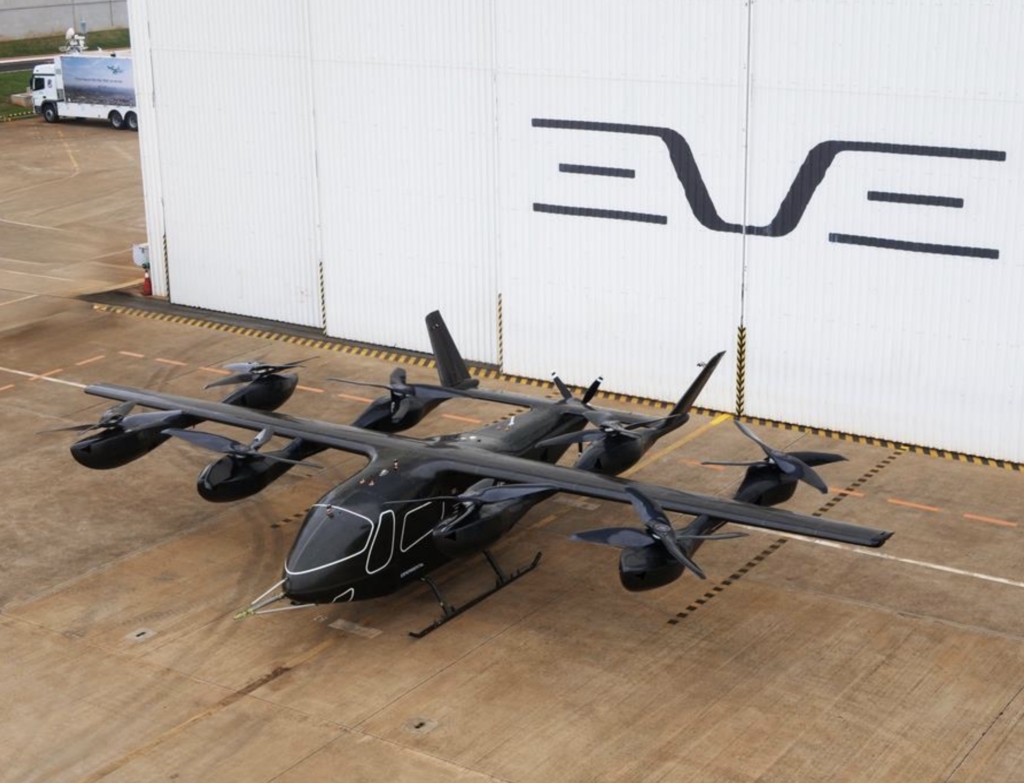
Joby Aviation, which is widely considered the technical frontrunner in the Western eVTOL race, completed its first manned eVTOL transition flight in April 2025 and has completed hundreds of successful flights since. Most recently, in April, the company began a series of demonstration flights between New York JFK Airport and downtown Manhattan using one of its crewed test aircraft.
Similarly, UK-based Vertical Aerospace achieved its first manned transition flight on 14 April. With this, the developer became the first European company to have completed this milestone under Design Organisation Approval (DOA) oversight with the UK Civil Aviation Authority. This means the flight was done within the certification framework, so that it actually counts towards getting the aircraft certified by the CAA.
Although US-based Archer Aviation has completed numerous unmanned transition flights with its Midnight eVTOL aircraft, as of early May, Archer had not publicly demonstrated a piloted full VTOL-to-wingborne-to-VTOL transition with Midnight.
Certification of Eve’s eVTOL aircraft slips to 2028
With the first transition flight due later this year, Eve is already looking ahead towards certification. However, having originally forecast a certification date of 2027, Eve has now pushed this target back to 2028.
Explaining why this is the case, Bordais told investors that the company would take 12 months to complete the necessary flight tests for certification to take place. However, this timeframe would also allow for more marketing and greater visibility of the eVTOL programme, ensuring it is better prepared for its entry into service in 2028.
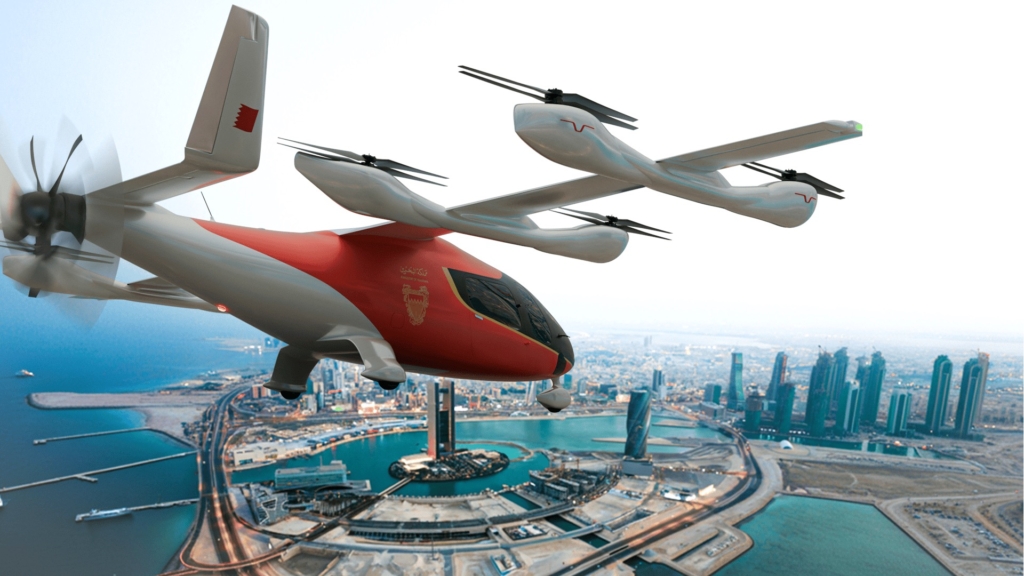
“This greater visibility gives us more confidence in the new schedule and lowers its risks,” he said. “The new timeline is also important to incorporate knowledge gained from the engineering prototype into the conforming prototype and guarantee the maturity and performance level of our eVTOL, especially for range, noise, reliability, payload, and lower operating cost.”
Eve’s flight test programme to date
So far, the flight test programme of the aircraft has gone according to plan, with Eve adding that its flight campaign had so far “excelled in quality”.
Eve’s development aircraft first flew in December 2025. By the end of March, it had completed 59 separate flights (including vertical take-off, hover and landing) and had flown for two hours and 27 minutes in total.
In total, company engineers have already validated 130 different performance metrics, with the prototype having reached 68.6 metres (215ft) above the ground and moved forward at 30 knots using its vertical lift devices.
Besides flying more frequently, longer, higher, and faster since its first flight in December 2025, the aircraft had completed multiple on-air manoeuvres in all four axes, as well as testing the autoland feature fully controlled by the fly-by-wire system.
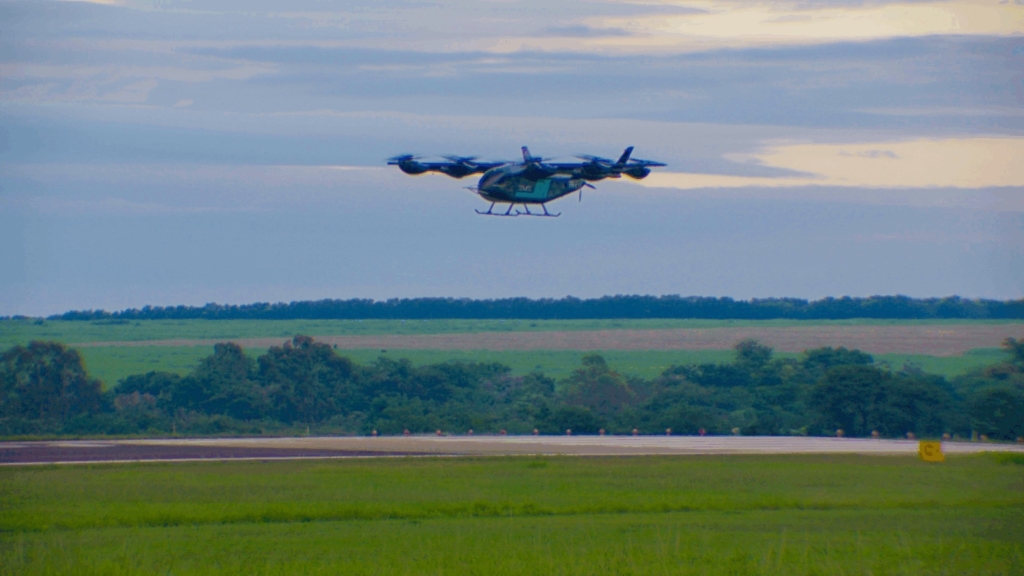
During the remainder of the second quarter of 2026, Eve said it will upload refined flight computer software and perform final ground tests on the pusher and actuators. This will ensure that they are fully integrated with all the other aircraft systems in preparation to initiate the planned transition flights
Once a successful transition phase has been completed later this year, the company intends to introduce controlled failures, such as motor shutdown, to observe system reaction and refine the safety procedures and the pilot’s protocols.
It will also begin the manufacturing of components that will make up the first production prototype aircraft due to fly in 2027.
