
Does Alaska Airlines' 1st European Route Make Sense?
On June 3, Alaska Airlines revealed its first European route. Starting next May, the oneworld member will begin flying from Seattle—by far its most-served airport—to Rome Fiumicino. The announcement came shortly after the carrier started its first long-haul service (to Tokyo Narita) and a day after Seattle welcomed Edelweiss as its next European operator.

Alaska Airlines
- IATA/ICAO Code
- AS/ASA
- Airline Type
- Full Service Carrier
- Hub(s)
- Anchorage International Airport, Los Angeles International Airport, Portland International Airport, San Francisco International Airport, Seattle-Tacoma International Airport
- Year Founded
- 1932
The Alaska Air Group acquired Hawaiian Airlines in 2024. While the plan for separate brands continues, they are expected to have one air operator's certificate in the final quarter of 2025. While unconfirmed, the 300-seat Boeing 787-9 that'll fly to Rome (and elsewhere) will probably be in Alaska Airlines' livery. The lack of mock-ups explains why only Hawaiian images are shown in this article.
Alaska Airlines To Begin 1st Seattle To Rome Flights
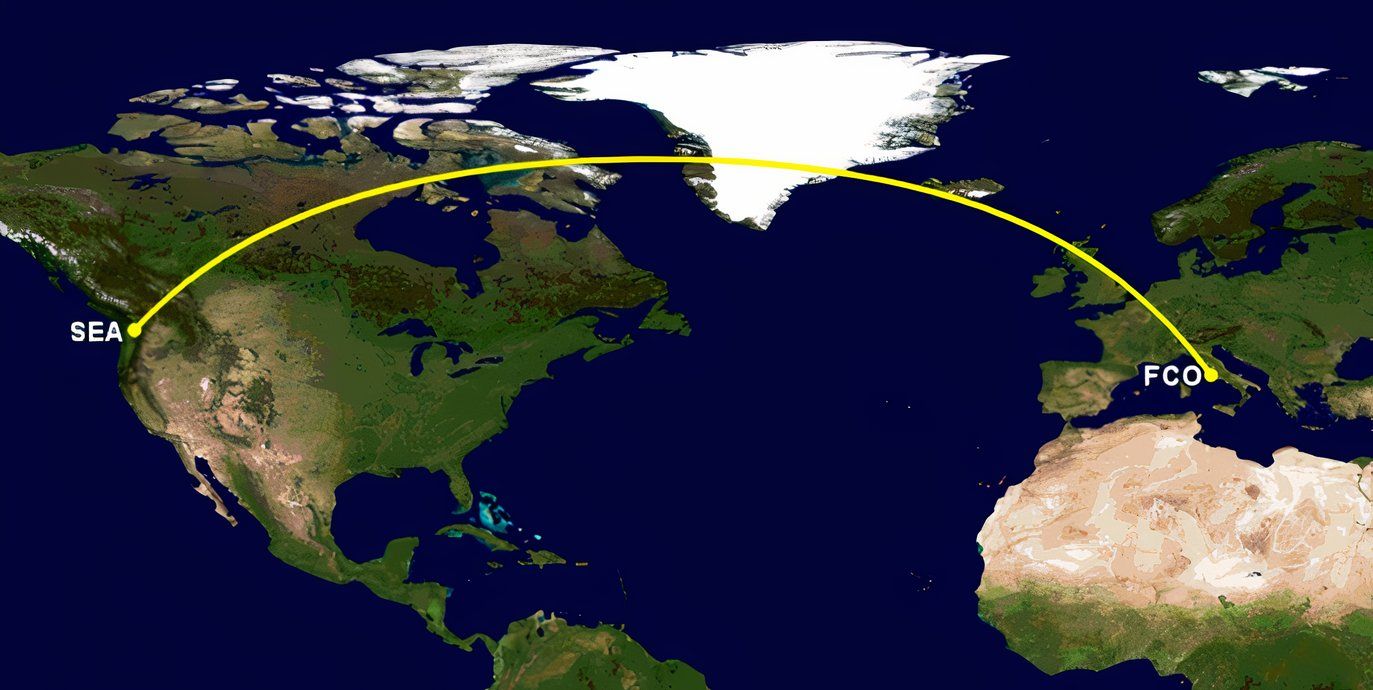 Image: GCMap
Starting in May 2026, Rome will be Alaska Airlines' first European destination. While unconfirmed, the new service is likely to be seasonal. Flights will run four times weekly on the 787-9. Unless things change, it will become Seattle's second-longest European route, after Istanbul Airport (on the European side of the Bosporus) with Turkish Airlines.
You can see why Alaska Airlines chose Rome. With 43,000 round-trip local passengers last year, the Italian capital was Seattle's largest unserved European city (Barcelona and Athens are second and third). As usual with new launches, particularly in leisure-driven markets, traffic will grow nicely from nonstop flights and hopefully strong promotions. However, the long stage length and being very leisure-heavy will mean lower yields, somewhat offset by Alaska Airlines having a monopoly on the route.
Despite Much More Capacity, The West Coast Is Very Unserved To Italy
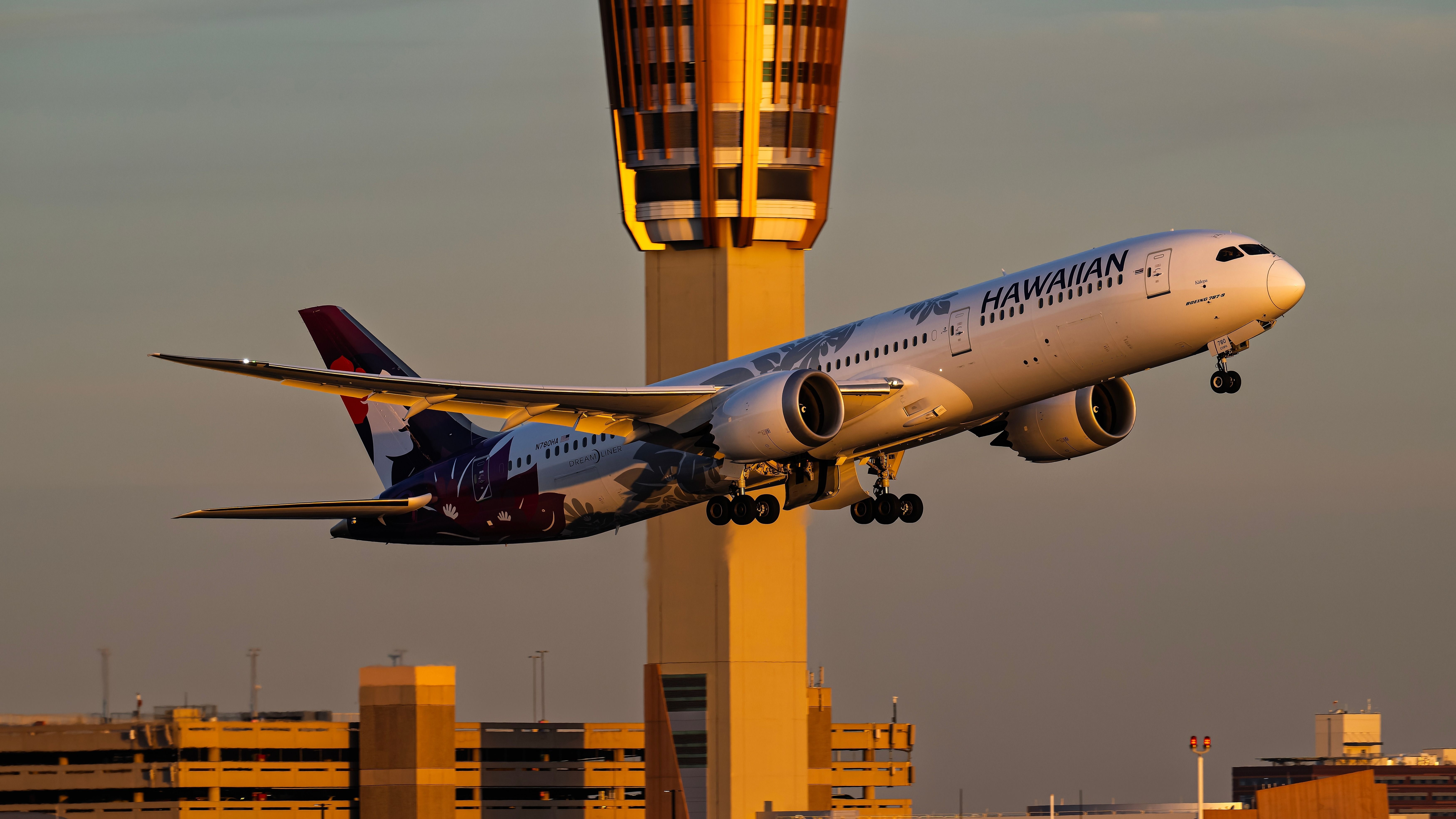 Photo: Robin Guess | Shutterstock
Reflecting buoyant demand, capacity between North America and Rome has seen considerable growth recently (although not as much as for Italy generally). In the all-important Q3 2025 (July-September), Cirium Diio data shows that Rome has over two million round-trip seats, which is a record. Capacity is up by a third compared to before the pandemic in Q3 2019. It has risen by a more modest 3% year-on-year, reflecting the extra capacity and slowing demand.
Despite the increase, the US and Canadian West Coast, and the Western areas of those countries, are very underserved to Rome. In 2024, more than 670,000 passengers flew via a hub, around 75% of the total traffic. More routes launched in 2025, such as Norse Atlantic between Rome to Los Angeles in April (joining ITA Airways on that city pair) and United beginning the first flight ever from Denver to Rome. They join ITA and United to/from San Francisco.
To help make long-haul economics work, strong point-to-point traffic is critical, not least because it is higher-yielding and less expensive than connecting passengers. This will be no different for Alaska Airlines. Looking at places without nonstop Rome flights shows that Vancouver (49,000), Phoenix (44,000), San Diego (33,000), Las Vegas (28,000), Salt Lake City (22,000), and Portland (21,000) will be important, although all have various one-stop options already. Dozens of other Western cities have 5,000+ passengers, many of which will gain one-stop Rome flights for the first time.
It is the US's largest foreign long-haul operator.
Thinking only about passenger numbers, Italy's growth, and the country's continued popularity suggests that Rome is an unsurprising choice. It's a good-sized market, and Alaska Airlines will find it easy to fill its aircraft. However, it is a long route, which obviously increases operating expenses. Compounding this situation is that most passengers will be traveling for leisure reasons, with fewer people in premium classes.
While some other unserved European cities from Seattle have fewer passengers, they have higher yields from more premium travel. Consider the Spanish capital, Madrid. While it has fewer pre-stimulated local passengers (33,000), yields are around a third higher than Rome's. This is from being shorter (which also reduces expenses) and more premium traffic. Alaska Airlines could also benefit from more traffic from the oneworld connection with Iberia.
Will Madrid flights materialize in the future? Or will Alaska Airlines' European development be similar to WestJet, which seems to focus more on leisure-heavy markets? If so, Alaska Airlines may add the ever-popular Barcelona (Seattle's second-largest unserved European city) instead of Madrid. Time will tell.
