
DARPA’s X-65 enters final assembly ahead of first flights in 2027
The experimental X-65 aircraft has entered final assembly, with its fuselage delivered to Aurora Flight Sciences’ facility in Virginia as the programme transitions from structural build to systems integration ahead of its planned first flight in 2027.
The Boeing subsidiary confirmed that the fuselage arrived in February, with teams now working to install electrical systems, propulsion architecture and the aircraft’s defining active flow control (AFC) technology. Wing and tail structures continue to be manufactured separately in West Virginia.
“The fuselage has arrived at our Virginia facility. The aircraft build is underway,” the company said, adding that “integration of electrical, propulsion and AFC systems is now progressing as planned”.
The X-65 is being developed under the US Defense Advanced Research Projects Agency’s (DARPA) Control of Revolutionary Aircraft with Novel Effectors (CRANE) programme, which is aimed at demonstrating whether airflow alone can replace conventional control surfaces such as flaps, rudders and ailerons.
DARPA X-65 tests active flow control to replace flaps, rudders and aileron
At the centre of the programme is a question that dates back to the earliest days of powered flight: whether an aircraft can be controlled without moving surfaces.
Since the Wright Brothers introduced wing-warping in 1903, aircraft have relied on mechanical surfaces to alter airflow and generate control. The X-65 seeks to move beyond that principle by using jets of air embedded within the airframe to manipulate aerodynamic forces.
The aircraft will employ a series of pressurised air effectors integrated into the wings and tail to control pitch, roll and yaw without hinges or actuators.
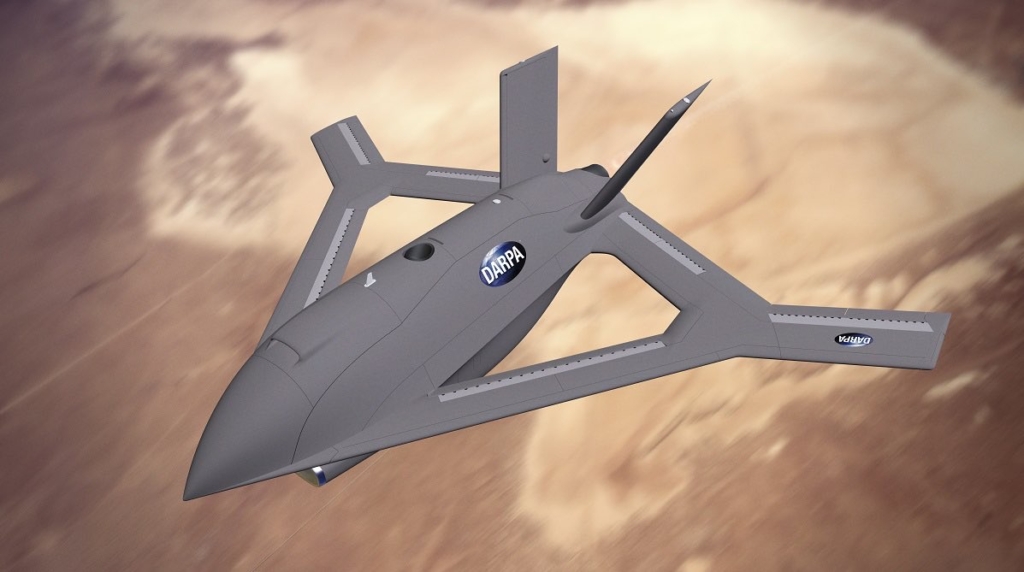
By energising and redirecting airflow, the system is designed to achieve manoeuvrability through fluid dynamics rather than mechanical movement.
DARPA has described the concept as a way to “reclaim design freedom”, removing constraints imposed by traditional control surfaces and potentially enabling new aircraft configurations.
Aurora’s teams are now moving into the integration phase of X-65
The arrival of the fuselage marks a shift in the programme’s focus. Having completed major structural work, Aurora’s teams are now moving into the integration phase, where subsystems are brought together ahead of ground testing.
According to the company, propulsion and AFC components are being installed in Virginia, while manufacturing continues across multiple sites.
The distributed production approach reflects the complexity of the aircraft, with key elements developed and assembled in parallel.
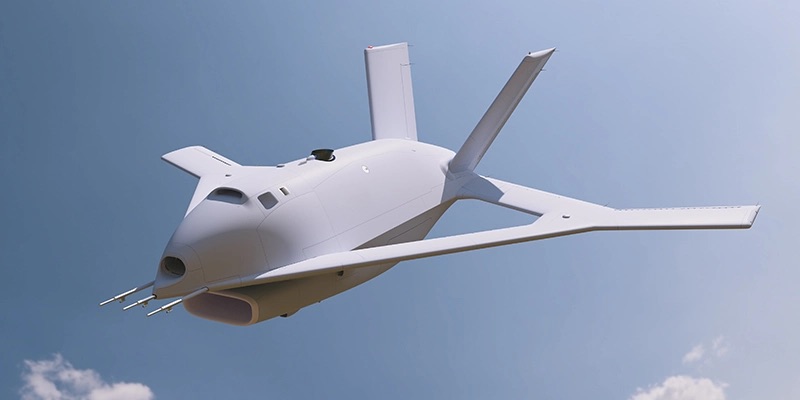
The X-65 has not followed a straightforward development path. Earlier plans had targeted a first flight in 2025, but the schedule was revised after programme costs exceeded initial projections.
DARPA subsequently paused and restructured the effort, with Aurora taking on a co-investment role to carry the aircraft through to flight testing.
The revised plan includes completion of major structures, system integration through 2026, and a series of ground and flight tests extending into 2027.
Despite the delay, the programme has retained its original technical ambition: to demonstrate AFC at a scale and speed relevant to operational aircraft.
X-65 designed as full-scale test aircraft for real-world active flow control validation
Unlike smaller demonstrators, the X-65 has been conceived as a full-scale testbed capable of generating data applicable to real-world aircraft.
The aircraft is expected to weigh just over 7,000 pounds, with a wingspan of around 30 feet and a top speed approaching Mach 0.7.
These characteristics place it closer to a light military aircraft than a laboratory prototype, allowing engineers to assess AFC performance under realistic flight conditions. Its design also reflects long-term use.
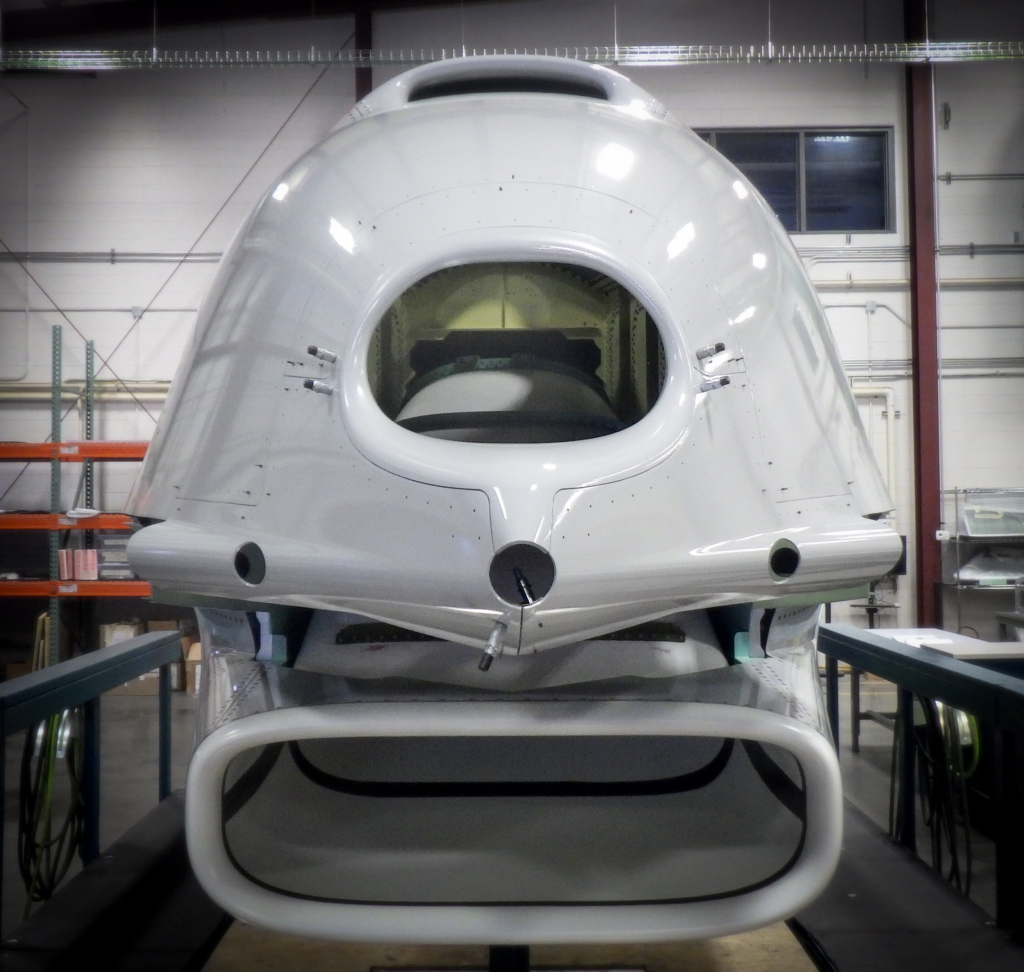
The platform is modular, with interchangeable wing sections and flow control components that can be adapted for different test campaigns. This approach is intended to extend the aircraft’s role beyond the initial CRANE programme.
Aurora has said the aircraft is expected to serve as an enduring flight-test asset, supporting future research into aerodynamic control and aircraft design.
X-65 aims to validate active flow control on operational-scale aircraft
Active flow control has been studied for decades, including through earlier DARPA programmes, but has remained largely confined to wind tunnel experiments and small-scale demonstrators.
The X-65 represents the first attempt to validate the concept on an aircraft that resembles an operational platform.
Initial flights are expected to use conventional control surfaces alongside AFC, with later tests gradually shifting towards full reliance on airflow-based control.
“The X-65 platform will be an enduring flight test asset,” Aurora said, noting that future aircraft designs could draw on the data generated during the programme.
If successful, the technology could influence a range of future systems, from unmanned aircraft to next-generation combat platforms and more efficient transport designs.
