Boeing starts up new 737 MAX final assembly line at Everett
Boeing has begun operating a fourth 737 MAX final assembly line at its Everett, Washington, factory, advancing the manufacturer’s long-term plan to increase production of its bestselling narrowbody aircraft.
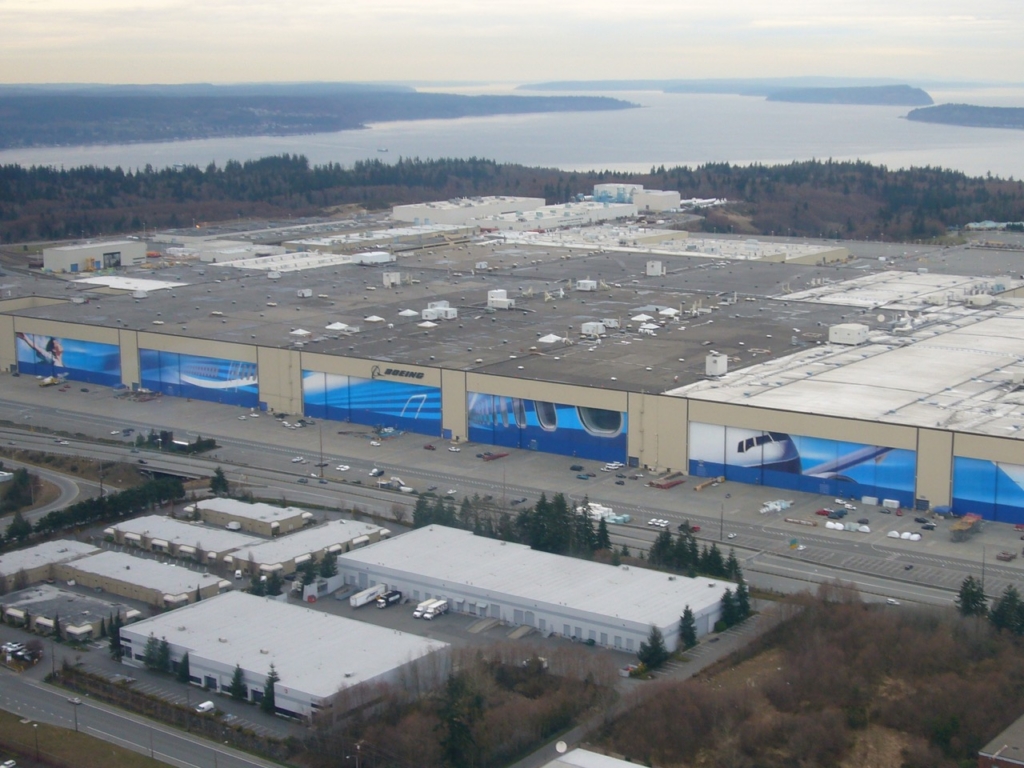
As reported by Reuters, the new production line, known internally as the North Line, officially started moving aircraft on July 6. It is located inside Boeing’s Everett facility, the world’s largest building by volume, where space became available after 747 production ended and Boeing consolidated 787 Dreamliner assembly in South Carolina.
The additional line will help Boeing increase 737 MAX output from the current 42 to 47 per month, with a further increase to 52 per month targeted by early 2027.
The manufacturer has also been evaluating longer-term production rates of up to 70 aircraft per month as demand for single-aisle jets continues to outpace supply.
New line mirrors Renton’s 737 production system
The North Line is Boeing’s first commercial narrowbody final assembly line outside Renton, where every previous generation of the 737 has been built since the programme began in the 1960s.
Rather than creating an entirely new manufacturing process, Boeing has replicated the moving assembly system already used on its three existing 737 production lines in Renton, Washington.

The North Line will initially produce the 737-8, 737-9 and 737-10, and will ultimately be capable of building all 737 MAX models.
Boeing has introduced a 737 Wing Transport Tool to ferry partially completed wings to Everett for final assembly.
Initially, the Everett line will focus on validating production processes and training employees rather than immediately increasing output.
Recovery after production restrictions
The expansion comes as Boeing continues to recover from the manufacturing and quality issues that have disrupted its commercial aircraft business over the past several years.
The January 2024, Alaska Airlines’ 737 MAX 9 door-plug blowout accident prompted rigorous US Federal Aviation Administration (FAA) oversight of Boeing production.

The regulator restricted Boeing’s monthly 737 production rate to 38 aircraft a month while the planemaker improved its manufacturing quality systems.
Since then, Boeing has gradually restored production, with FAA approval allowing output to increase to 47 aircraft per month earlier this year.
Adding the Everett line allows the company to maintain its revised manufacturing standards while supporting future production increases.
“North Line is expected to begin operations later this year at a low rate of initial production to demonstrate conformity to the FAA that will allow operations under our current production certificate,” Boeing CEO Kelly Ortberg said during the Q1 earnings call this April. “Following completion of these initial units, we will be led by our safety and quality plan to increase the rate to 52 per month when the entire production system is ready.”
Hiring to support production growth
To staff the new assembly line, Boeing has been recruiting more than 100 factory workers each week in the Pacific Northwest. The hiring campaign supports both the Everett expansion and the replacement of retiring employees across commercial programmes.
The additional workforce will support Boeing’s strategy of increasing deliveries while working through a commercial aircraft backlog that stretches into the next decade.
“Employees for the North Line will complete structured on-the-job training, which will pair new mechanics with experienced teammates from our existing Renton Line,” Ortberg said during the Q1 earnings call.
“It’s like running,” said Jennifer Boland-Masterson, production leader for the Everett line, in a Boeing update on staff training at Everett this April. “We know how to do it, and we’ve done it before, but we need to warm up our muscles. You don’t start with a marathon. You start with shorter distances and build up from there.”
Everett enters a new era
For decades, Boeing’s Everett factory was synonymous with widebody aircraft, producing the 747, 767, 777 and 787 Dreamliner.
The final 747 rolled out in 2022 after more than 50 years of production, while final assembly of the 787 moved entirely to North Charleston, South Carolina. Those changes freed significant floor space inside the 98-acre main assembly building, allowing Boeing to repurpose part of the facility for 737 production.

The production of narrowbody aircraft at the site mirrors market trends, as airlines increasingly favour fuel-efficient single-aisle aircraft for both domestic and longer international routes.
Boeing’s 737 MAX competes directly with the Airbus A320neo family, which continues to record strong demand worldwide.
The 737 MAX remains Boeing’s highest-volume commercial aircraft programme and a critical contributor to the company’s financial recovery as airlines worldwide continue to modernise their fleets with more fuel-efficient narrowbody aircraft.
