
Aid with altitude: How Africa is leading the charge in Advanced Air Mobility for good
From life-saving blood and medical equipment to shelter materials, food aid and real-time surveillance, Africa is leading the charge as Advanced Air Mobility (AAM) reshapes the future of humanitarian response.
Back in 2016, Time reported how Ghislane Ihimbazwe, a two-year-old girl in Rwanda, owed her life to a drone delivery.
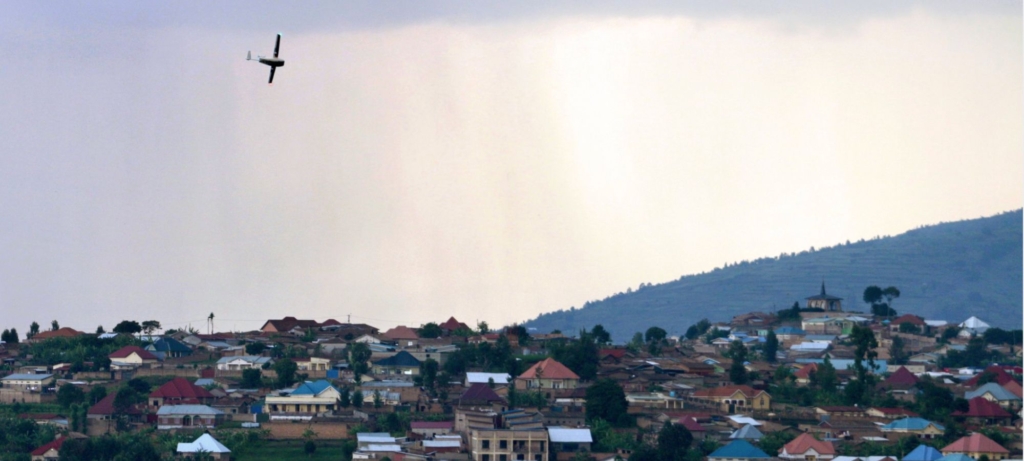
After contracting an acute form of malaria that attacked her red blood cells, Ghislane urgently needed a transfusion. Instead of making the typical three-hour round trip from a central blood bank in Kigali, medical staff received paediatric red blood cells in just six minutes. The then US-startup Zipline flew the lifesaving supply directly to the patient by drone.
That single flight marked the beginning of a logistics shift that is now reshaping humanitarian aid.
From Zipline’s pilot project to national infrastructure
Since partnering with the Rwandan government in 2016 to launch the world’s first commercial medical drone delivery service, Zipline has rapidly expanded its footprint and impact across Africa.
The company’s original system, Platform 1 (P1), uses lightweight fixed-wing drones launched by catapult from custom-built hubs. Weighing around 20kg, the drones cruise at more than 100km/h at altitudes of between 80 and 120 metres. The cargo is dropped by a parachute into a five-metre target zone before the drone returns to base, where it is caught using a tailhook recovery system.
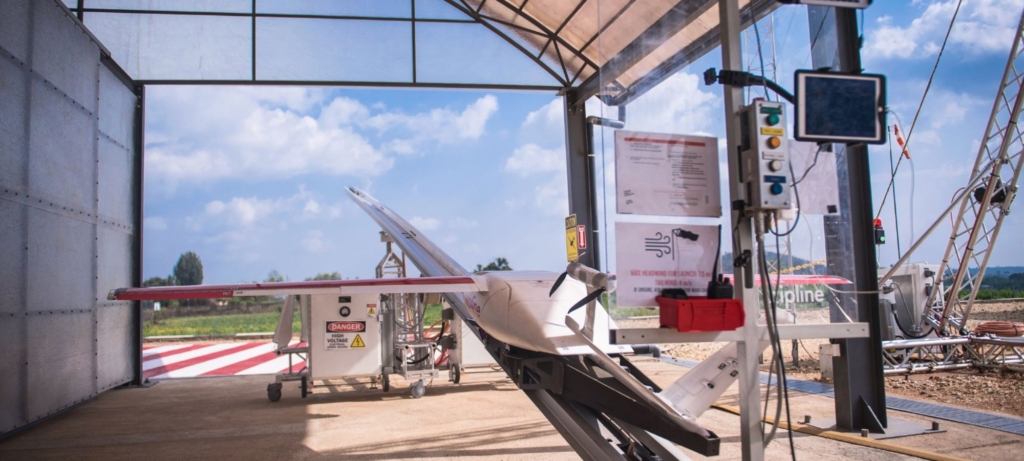
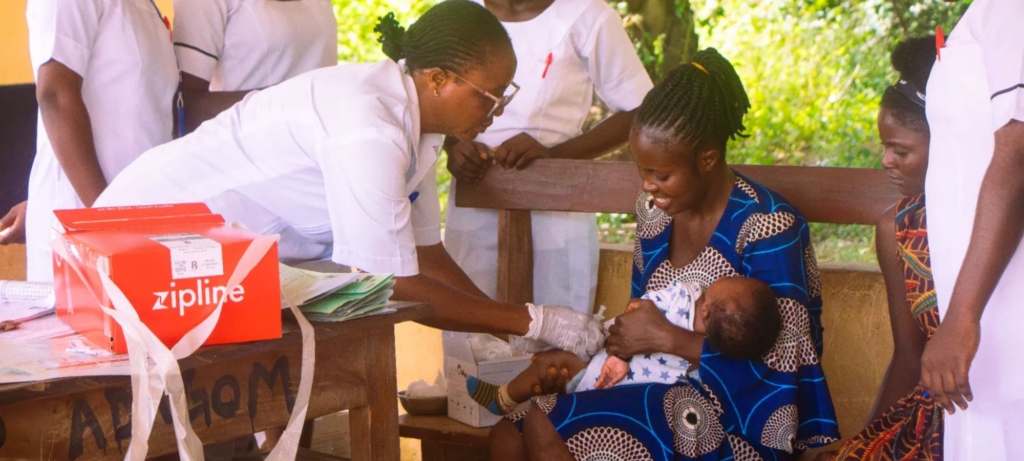
Over the last decade, Zipline has revolutionised access to lifesaving medical supplies across multiple African countries, including Ghana, Kenya, Nigeria and Côte d’Ivoire. Its autonomous logistics system has helped doctors save tens of thousands of lives and increased immunisation rates by 17%.
Now Zipline’s new pay-for-performance approach, announced in November 2025, expands access to blood and medicines for up to 15,000 health facilities, providing better health outcomes for up to 130 million people and creating jobs across Africa and the US.
This new model will see Zipline receive up to $150 million from the US State Department to expand its AI and robotics infrastructure, enabling African governments to provide 24/7 delivery of essential medical supplies to hospitals and health facilities.
Heavy lift, long-range missions
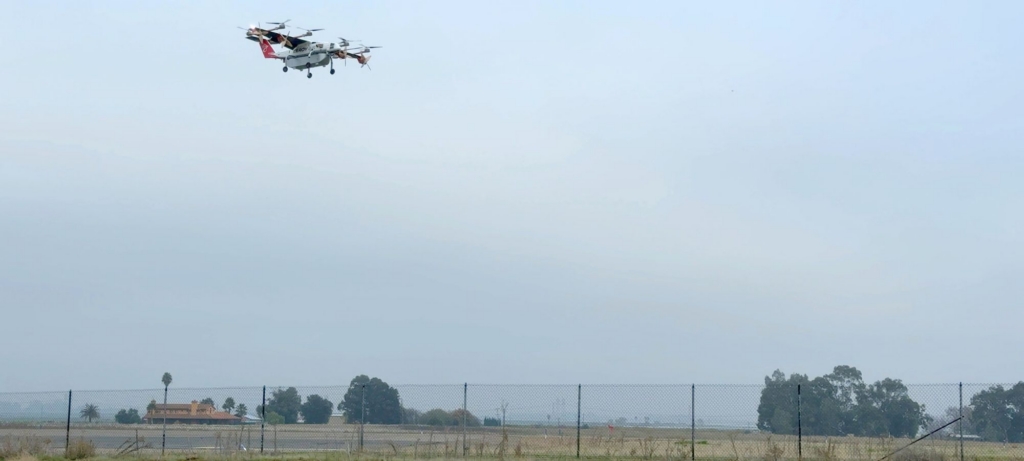
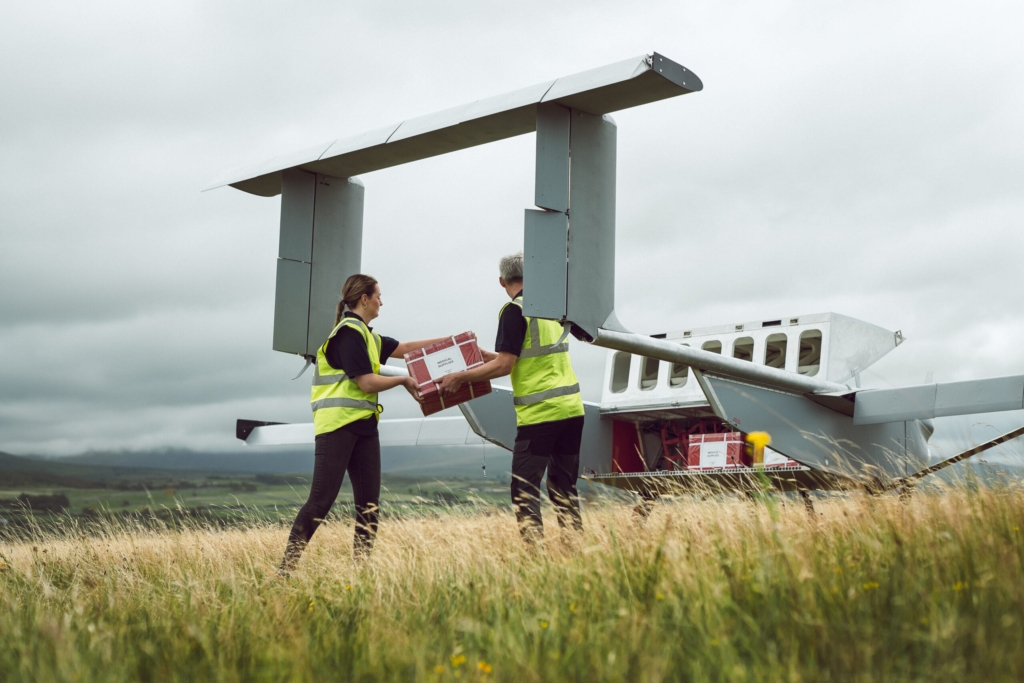
Zipline is not alone in scaling Advanced Air Mobility (AAM) for aid. California-based Elroy Air is also on a mission to define the future of logistics and humanitarian aid, using its autonomous hybrid-electric vertical take-off and landing (VTOL) aircraft – the Chaparral.
“Long-range, heavy-lift Uncrewed Aerial Vehicles (UAVs) are poised to transform humanitarian supply chains,” Dr Andrew Clare, CEO of Elroy Air, told Aerospace Global News.
Capable of carrying 140-230kg of cargo over 480km without the need for airports, Clare explained how the Chaparral “enables safe, efficient aerial cargo transport for commercial defence and humanitarian options all at a cost lower than traditional aircraft, at no risk to pilots and without reliance on airport infrastructure.”
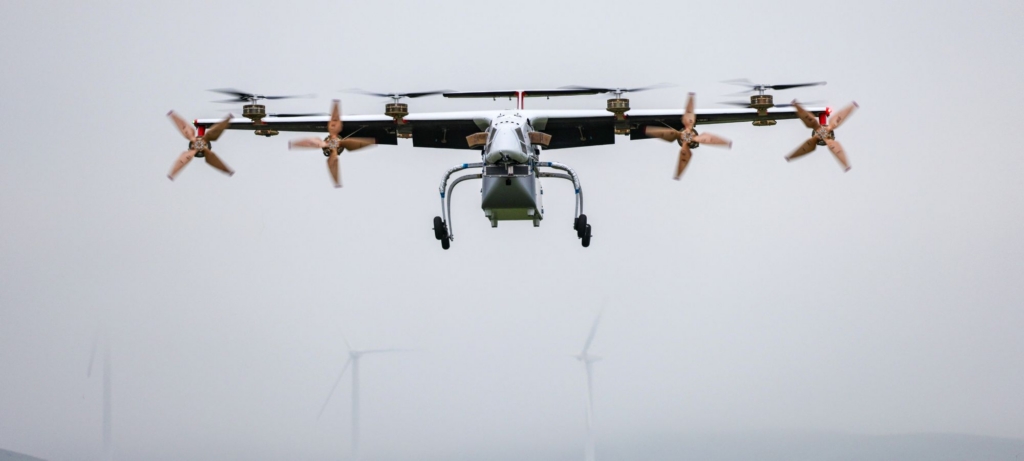
The Chaparral is designed to operate in situations where infrastructure is damaged or inaccessible. “Simply fuel it up, and that’s all it needs to complete the mission,” said Clare.
“Humanitarian response demands heavy loads like water, food and supplements, shelter materials, medical equipment and spare parts. Moving hundreds of pounds at a time is a different mission than delivering a few pounds, and it’s a mission that has long gone underserved.”
With a focus on “striking the right partnerships” with global humanitarian organisations that understand the right way to integrate Chaparral into their operations, Clare underlined that Elroy Air is also working with local and federal governments and regulators to secure the approvals needed to scale these life-saving missions.
Africa as a proving ground for AAM’s use in humanitarian missions
According to Jonty Slater, CEO of the African Drone Forum, cargo-first, uncrewed, beyond visual line of sight (BVLOS) drone networks and emerging heavy-lift systems underpin the continent’s AAM revolution.
“Humanitarian response is the highest-impact use case,” Slater noted. “But it relies on the same core capability as essential services and commercial demand.”
The real shift now, he emphasised, is from isolated pilot projects to reliable, repeatable logistics systems that can operate daily and surge during crises.
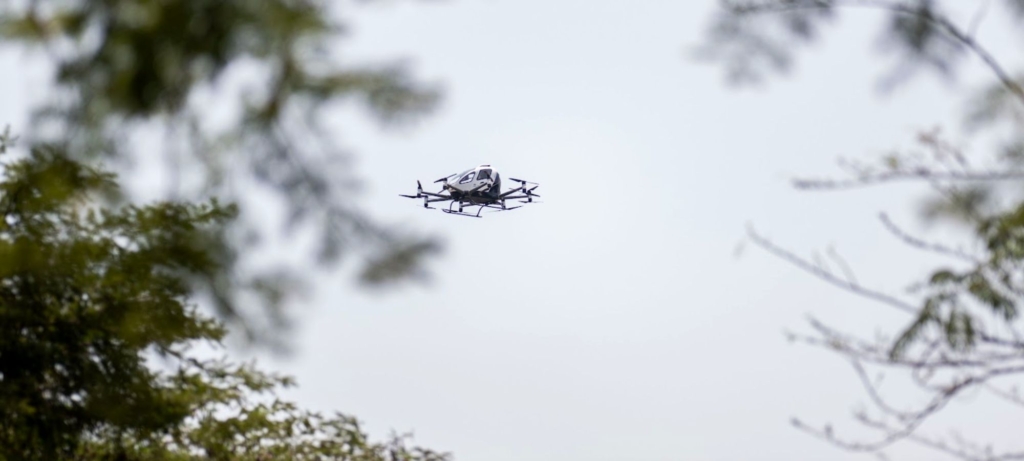
Slater also noted that the opportunity in Africa for drone delivery networks stems from the fact that drones do not compete with roads. Instead, “they compete with the absence of roads.”
Africa averages around 7km of road per 100km2 of land, compared to 122km per 100km2 in Europe. Roughly 80% of Africa’s roads are unpaved, making them impassable during rainy seasons. In such environments, aerial cargo can compress delivery times from days to hours and maintain access during floods, conflict or infrastructure failure.
“AAM builds a parallel logistics layer above fragile infrastructure – and it’s often more dependable when seasons make roads brittle,” said Slater.
Regulation is the final frontier for AAM’s wider implementation
Despite technological readiness, regulatory scalability remains a bottleneck. The challenge here is less about whether countries have rules, and more about securing scalable, repeatable approvals – especially for BVLOS operations, routine corridor permissions and flights near controlled airspace. Slater pointed out that for humanitarian operations, pre-approved emergency authorisations will prove critical.
Stewart Wallace, head of safety and regulations at Windracers, echoes that sentiment. “Managing safety and risk to maximise social benefit is key to the future of autonomous logistics,” he said.
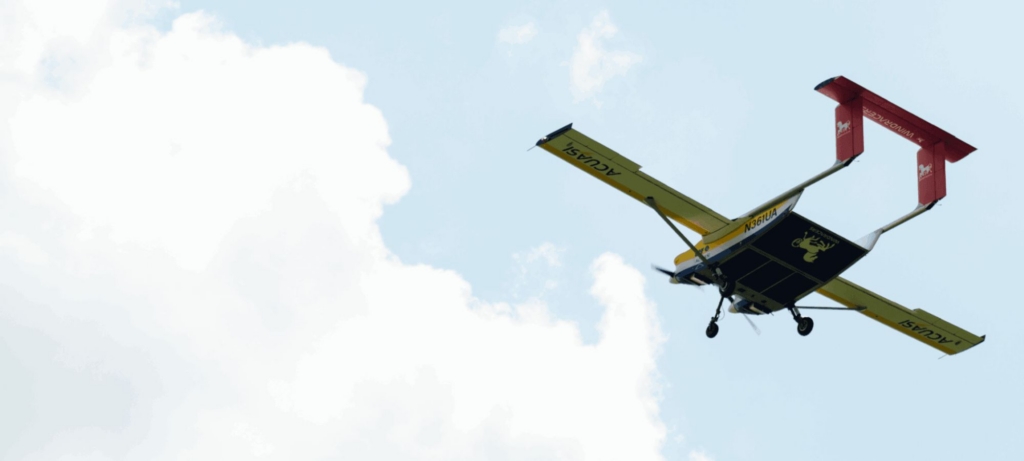
Like the Chaparral, Windracers’ ULTRA cargo drone – described as a “flying transit van” – carries 150-160kg loads over long distances using autonomous taxi, take-off and landing capabilities. It offers a cost-effective means of delivering humanitarian aid to hard-to-reach locations.
In 2025, Windracers established an operational base at Kasungu Airfield in Malawi, designed to support Aviation Sans Frontières in delivering vaccines and medical supplies to remote areas.
Windracers worked closely with the Malawi Civil Aviation Authority and the country’s Meteorological Services to secure regulatory compliance and allow real missions to take place, supporting medical logistics, disaster response and environmental monitoring.

While heavy-lift cargo drones such as Windracers’ ULTRA don’t require a human operator, regulations are holding back the full potential of these platforms, according to Wallace. He explained that in most jurisdictions, drones must remain within the operator’s visual line of sight, or special waivers must be granted. Regulations often require a dedicated pilot or operator for each UAV, sometimes with additional observers for safety.
In addition, many UAV Regulatory Frameworks remain focused on smaller, less capable platforms, and have yet to encompass larger, more complex and capable UAVs, such as Windracers’ ULTRA.
Alongside Windracers’ operations in Malawi, Wallace revealed that ongoing operations in Alaska with the Alaska Center for Uncrewed Aircraft Systems Integration (ACUASI) are helping generate real-world evidence for regulators. “We’re demonstrating how heavy-lift UAVs like Windracers ULTRA can deliver critical supplies safely and reliably where traditional logistics cannot.”
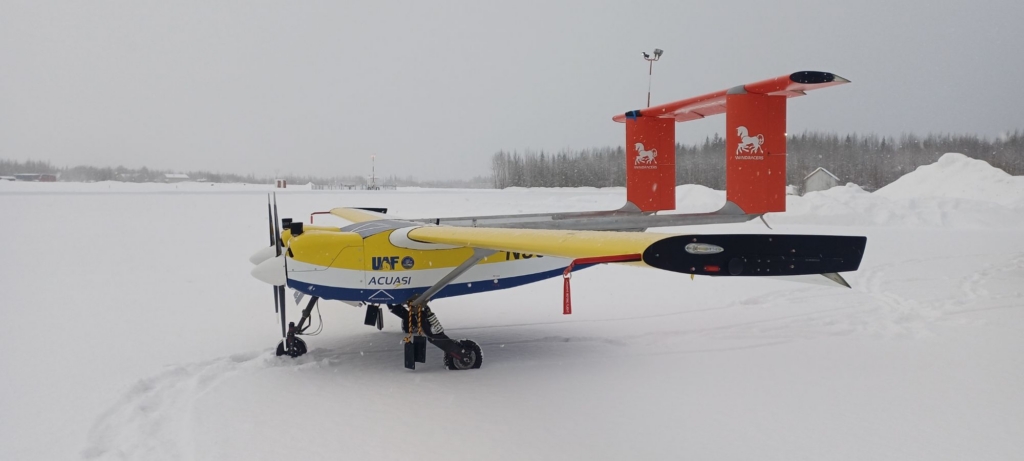
Wallace also noted that for heavy-lift autonomous UAVs to reach their full potential, regulations need to be flexible enough to consider unique operational contexts, risk mitigation technologies, and proven safety records, rather than applying blanket restrictions.
Building the ecosystem beyond the aircraft
The future of humanitarian AAM is not simply about aircraft performance. It is reliant on developing the entire ecosystem, including reliable power and charging infrastructure, fit-for-purpose Uncrewed Traffic Management (UTM)-type approaches integrated with crewed aviation.
“The future of humanitarian AAM in Africa depends as much on regulatory and operational readiness as it does on technology,” agreed Slater.
Africa’s operational constraints – distance, heat, dust, intermittent connectivity, variable infrastructure and complex access environments – make it an ideal proving ground. Solutions that succeed in these conditions are highly exportable.
Over the next decade, African-led innovation will shape the global humanitarian AAM playbook through rugged, lower-cost cargo platforms, flexible operating models that work with uneven infrastructure, and the development of strong local talent pipelines.
Early donor support helped prove the concept. Long-term scale comes when governments, health supply chains, and commercial operators treat autonomous aerial logistics as a service utility, while humanitarian missions tap into the same network when crises hit.
In February 2026, Rwanda once again stepped into the AAM spotlight. It confirmed it will become the first country with nationwide full autonomous logistics coverage and the first in Africa to deploy Zipline’s P2 urban delivery system, expanding operations beyond humanitarian aid into commercial delivery services.
“Humanitarian operations are the stress test,” urged Slater. “Blended everyday demand is what makes the system durable – and that’s where Africa can lead globally.”
