AI teams MQ-4C Triton drone with P-8A Poseidon in maritime first
Northrop Grumman and Boeing have completed what they describe as the first automated manned-unmanned teaming demonstration between an MQ-4C Triton maritime surveillance drone and a P-8A Poseidon maritime patrol aircraft.
Conducted in a laboratory, the demonstration used artificial intelligence and open-system interfaces to allow the two aircraft systems to share intelligence, plan missions and coordinate maritime surveillance and anti-surface warfare tasks.
Northrop and Boeing team a Triton with a Poseidon
The teaming was achieved using AI and open systems architecture to enhance maritime ISR&T and anti-surface warfare interoperability, including decision speed and operator efficiency.
A P-8A operator instructed a simulated Triton to fly to a designated area. The Triton then autonomously planned the transit, tasked its sensors, processed the information onboard and returned its findings to the Poseidon.
The data was routed partly through a satellite relay to recreate realistic operational communications. Rather than relying on a bespoke connection between the two aircraft, the mission-management systems exchanged instructions using Open Mission Systems and the Universal Command and Control Interface.
The effort was a jointly funded technology demonstration between Northrop and Boeing and was an effort to showcase the “ability for the two systems to collaborate and automate mission control over open systems architecture.”
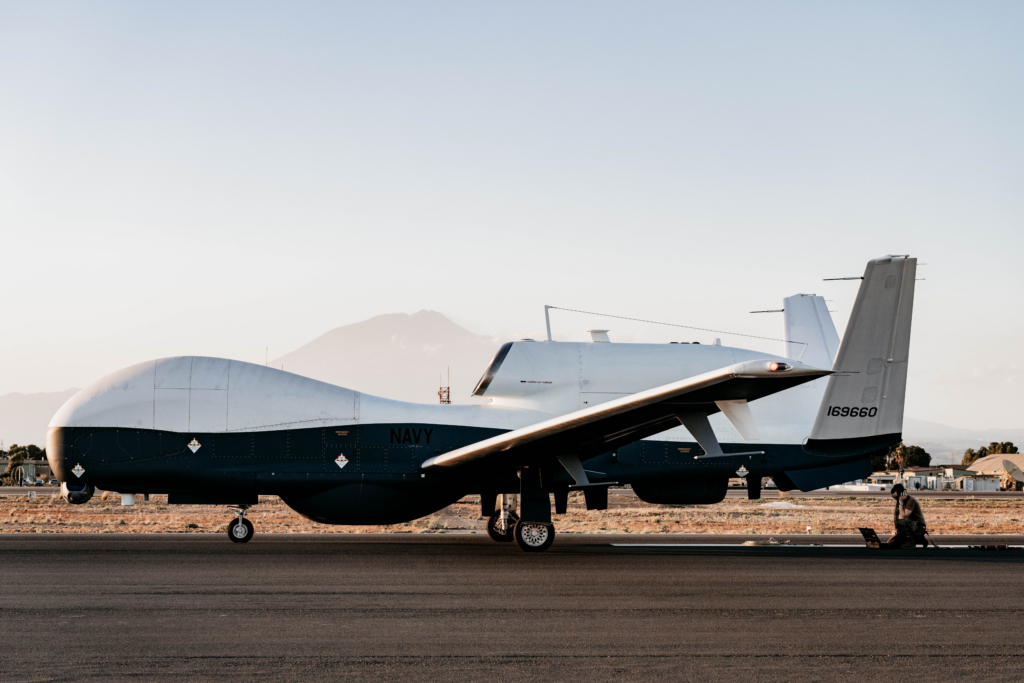
The Triton and Poseidon exchanged maritime intelligence through a standardised interface that “enables machine-to-machine mission planning and execution across platforms.”
These common standards are intended to allow compatible US and allied platforms to communicate without requiring a new point-to-point integration for every combination of aircraft. Boeing and Northrop say this could reduce operator workload, accelerate decision-making and make new platforms easier and cheaper to connect.
